
How to Recover From a Sports Injury Without Losing Your Fitness Progress
For acute structural injuries requiring immobilization, combine high-intensity neural cross-education on your uninjured side with low-load blood flow restriction training. For non-weight-bearing overuse injuries, switch immediately to high-intensity cardiovascular substitutes like deep water running or arm ergometers. Completely stopping physical activity is the fastest way to lose years of athletic conditioning. Maintaining high intensity during modified workouts preserves your aerobic capacity and muscle cross-sectional area while injured tissues heal. Combining active loading strategies with targeted care like sports medicine ensures you maintain neuromuscular function without stressing damaged ligaments or tendons. Here is how you can systematically adapt your training program, leverage advanced physiological mechanisms, and bounce back stronger without losing your hard-earned progress.
Key Takeaways
- Aerobic capacity drops rapidly within two weeks of rest, but high-intensity alternative cardio prevents cardiovascular decline.
- Lifting heavy weights with your uninjured limb preserves up to 18% of strength on the immobilized side through cross-education.
- Blood flow restriction training triggers muscle growth at just 20% to 30% of your maximum one-rep load.
- Targeted nutrition with 1.6 to 2.2 grams of protein per kilogram of body weight prevents muscle breakdown during lower activity.
- Clinical care combining chiropractic adjustments and rehabilitation therapy shortens total return-to-play timelines significantly.
The Physiology of Inactivity: How Fast Do You Lose Fitness?
Inactivity causes measurable drops in aerobic capacity within days, followed by gradual strength and muscle tissue loss. Many athletes assume a few weeks of complete rest will not hurt their physical conditioning. Clinical data proves that detraining sets in much faster than most people realize.
Your cardiovascular system suffers the earliest losses when you stop training. Plasma volume drops by roughly 12% within the first two weeks of total rest. This reduction directly lowers your heart’s stroke volume. As a result, your heart must beat faster to deliver oxygen to active muscles.
According to research published in Frontiers in Sports and Active Living, VO2 max drops roughly 7% in just 12 days of complete inactivity. Quadriceps muscle mass can decrease by up to 33% within three weeks of joint immobilization following surgery.
Strength levels decrease more slowly than aerobic endurance. A comprehensive meta-analysis in Sports Medicine – Open found that short-term detraining under 30 days reduces VO2 max by an average of 3.93%. Long-term detraining beyond 30 days pushes that cardiovascular drop to 9.43%.
Unchecked inactivity creates a steep mountain to climb once your tissues finally heal. Initiating modified conditioning within the first 48 to 72 hours post-injury dramatically limits these losses. Protecting your baseline capacity requires working around the injured zone rather than shutting down completely.
Harnessing Cross-Education for Neuromuscular Injury Repair and Recovery

Cross-education leverages neural signaling during single-limb exercise to preserve muscle strength and motor unit recruitment in your injured, immobilized limb. You do not need to move an injured arm or leg to protect its structural strength. Exercising the opposite, healthy limb creates a powerful neuroplastic response in the central nervous system.
When you perform heavy resistance training on your healthy side, sensory cortex signals cross over spinal neural networks. These electrical signals stimulate the motor units of the resting, injured limb. While this mechanism does not build raw muscle tissue in the immobilized side, it prevents neural drive degradation.
A clinical study in the British Journal of Sports Medicine highlighted the profound impact of contralateral exercise. Post-surgical patients using cross-education experienced only a 16.6% quadriceps strength loss compared to 32.0% in non-training control groups.
To maximize this neurological effect, stick to specific strength training parameters on your uninjured side:
- Perform heavy strength exercises at 80% to 85% of your single-limb one-rep max.
- Execute 3 to 4 sets of 3 to 5 repetitions per exercise.
- Schedule contralateral training sessions 3 to 4 times per week.
- Focus on explosive concentric movements and controlled eccentric phases.
Preserving these neural pathways ensures faster motor recruitment when you reintroduce bilateral movements. You eliminate weeks of basic re-education therapy simply by keeping the brain connected to the affected limb.
Blood Flow Restriction Training During Sports Injury Recovery
Blood flow restriction training uses partial vascular occlusion to stimulate muscle hypertrophy using very light physical loads. Traditional strength building requires lifting loads equal to 70% or more of your one-rep max. Damaged tendons, ligaments, or joint capsules cannot safely handle heavy mechanical stress during early healing phases.
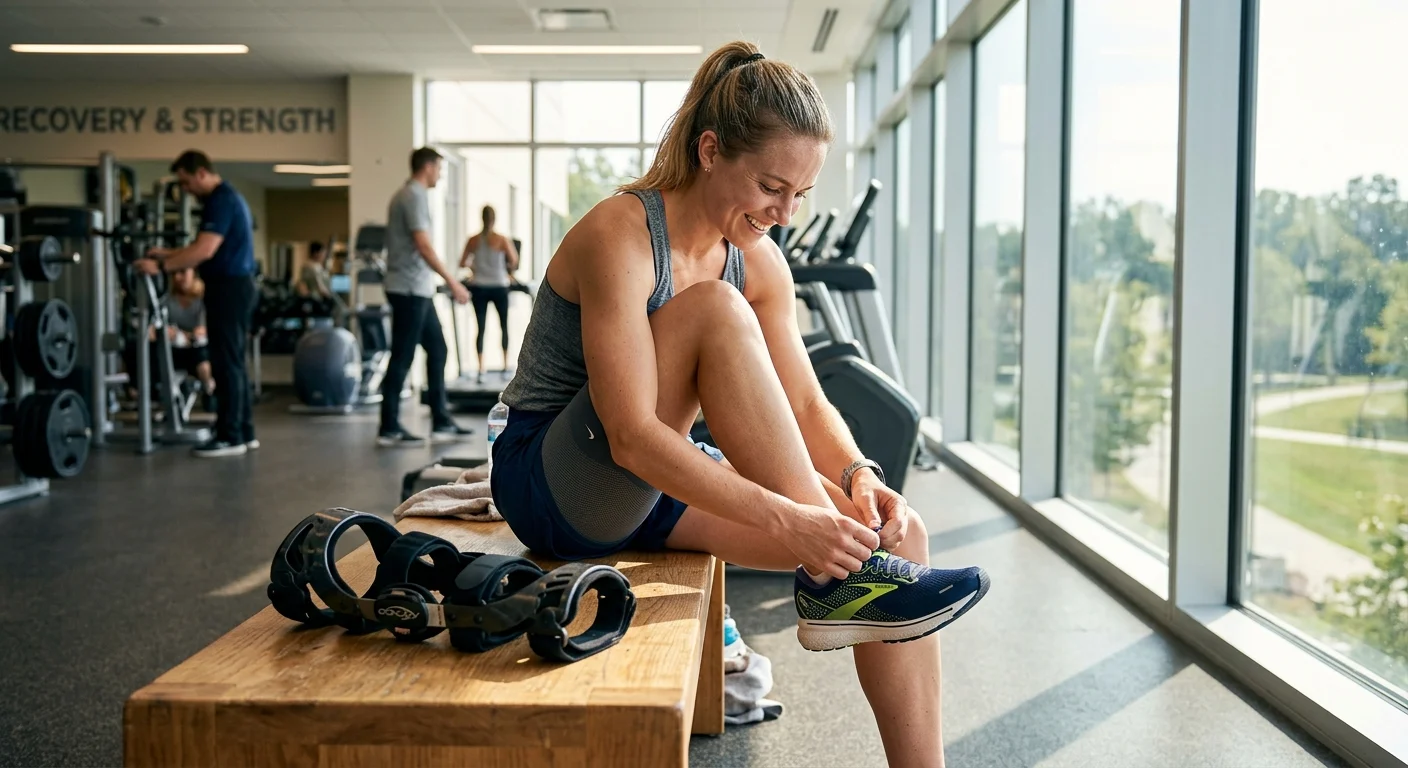
Blood flow restriction (BFR) solves this dilemma by placing a specialized pneumatic cuff on the proximal end of your injured arm or leg. The cuff restricts venous blood outflow while maintaining arterial inflow to the working muscle. This localized lack of oxygen creates significant metabolic stress and drives rapid accumulation of hydrogen ions and lactate.
A scientific review in Sports Medicine verified that low-load BFR training produces muscle growth comparable to high-load traditional resistance training. Performing movements at 20% to 30% of your maximum load triggers full muscle fiber recruitment without overloading healing joint structures.
High-quality clinical BFR cuffs cost between $150 and $400 for personal use. Supervised sessions with a physical therapist generally cost $50 to $120 per treatment visit. A standard BFR workout follows a strict high-repetition protocol:
- Set cuff pressure to 40% to 80% total arterial occlusion.
- Perform 30 repetitions on the first set to deplete tissue oxygen.
- Follow with 3 sets of 15 repetitions with short 30-second rest intervals.
- Keep the cuff inflated during rest periods to maintain metabolic stress.
By mimicking the chemical environment of heavy lifting, BFR protects lean muscle mass. It keeps your recovery on track while completely safeguarding fragile connective tissues from excessive mechanical forces.
Comparing Alternative Training Modalities During Physical Rehabilitation
Selecting the right training alternative depends on your structural limitations, financial budget, and specific athletic goals. The table below outlines how popular modified exercise strategies preserve physiological performance while protecting healing structures.
| Training Modality | Primary Physiological Target | Impact Level on Injured Zone | Average Cost / Equipment Investment |
|---|---|---|---|
| Blood Flow Restriction (BFR) | Muscle Hypertrophy & Local Strength | Very Low (20-30% 1RM) | $50–$120 per session / $150–$400 unit |
| Contralateral Training | Neural Retention & Motor Unit Recruitment | Zero Direct Impact | $0 (Standard Gym Access) |
| Deep Water Running | VO2 Max & Cardiovascular Endurance | Zero Joint Loading | $15–$30 (Pool pass & flotation belt) |
| Upper Body Ergometer (UBE) | Upper Aerobic Capacity & Core Stability | Zero Lower Body Impact | $0–$20 (Standard Gym Access) |
Combining multiple modalities delivers the best overall outcome during recovery. For instance, pairing aquatic conditioning with single-limb resistance training keeps both your heart and skeletal muscles firing at peak levels.
Strategic Conditioning Alternatives to Preserve Aerobic Fitness
Maintaining high cardiovascular intensity through non-impact exercise preserves your VO2 max even when total weekly training volume decreases. Resting completely because of a localized joint or muscle injury is a mistake. You can easily modify your cardiovascular workouts around lower or upper body limitations.
If you suffer from a foot, ankle, or knee injury, traditional running is off the table. However, deep water running provides a biomechanically similar alternative. Wearing a buoyancy belt allows you to perform running motions in deep water without any joint impact. Research shows trained athletes maintain precise endurance levels over six weeks of deep water pool training.
For upper-body injuries like shoulder dislocations or wrist fractures, seated stationary cycling or lower-body elliptical work fills the gap. Keep heart rate zones identical to your pre-injury training program to preserve stroke volume and mitochondrial density.
Follow these steps to transition into an effective alternative cardio routine:
- Identify safe exercise equipment that completely isolates the injured tissue.
- Establish your baseline target heart rate zones using historical workout data.
- Structure high-intensity interval training (HIIT) sessions twice per week at >85% max heart rate.
- Add two steady-state zone 2 aerobic sessions to maintain capillary density.
- Monitor the injured area for increased throbbing, swelling, or localized pain during workouts.
If you feel localized pain during cardiovascular work, stop immediately. Recognizing the signs you need a sports injury chiropractor ensures you do not aggravate healing structures while staying fit.
Optimizing Nutrition to Accelerate Injury Repair and Recovery
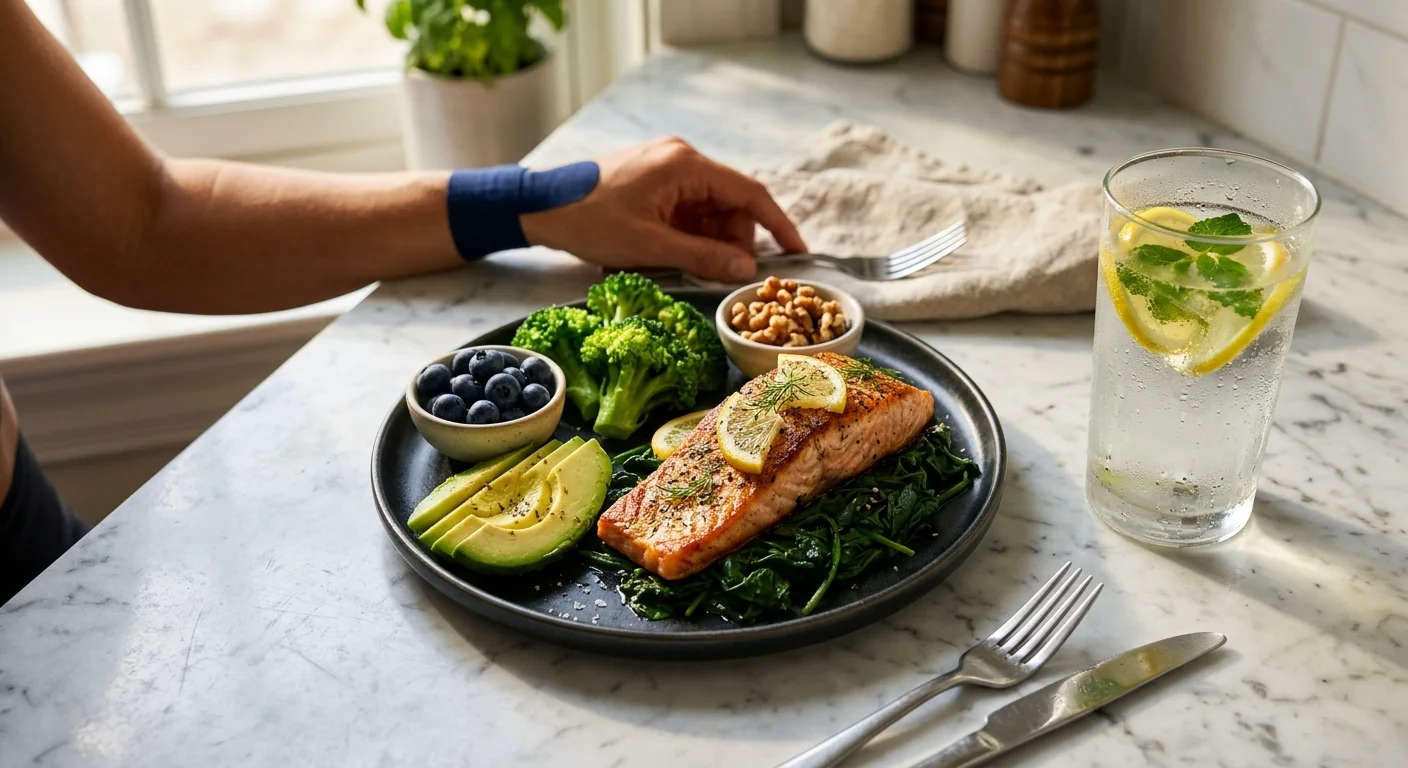
Targeted nutritional intake provides the metabolic building blocks needed for collagen synthesis and muscle tissue preservation during cellular healing. Many athletes make the mistake of cutting their caloric intake drastically when an injury forces them to reduce activity. Under-fueling starves repair processes and speeds up muscle wasting.
Your body requires substantial energy to repair broken bones, torn ligaments, or damaged muscle fibers. Protein intake becomes your primary defense against disuse atrophy. Aim for 1.6 to 2.2 grams of protein per kilogram of body weight daily. Distribute this protein evenly in 30 to 40 gram increments every three to four hours.
Specific supplements directly support structural tissue repair and muscle maintenance:
- Creatine Monohydrate: 5 grams daily maintains intracellular hydration and neuromuscular power ($20–$40 per tub).
- Hydrolyzed Collagen Peptides: 10 to 15 grams daily consumed 60 minutes before rehab increases collagen synthesis ($25–$50 per tub).
- Vitamin C: 500 mg paired with collagen enhances cross-linking in healing tendon matrixes ($10–$20 per bottle).
- Omega-3 Fatty Acids: 2 to 3 grams of EPA/DHA daily manages systemic inflammation without halting natural tissue remodeling ($20–$45 per bottle).
Proper nutrient timing amplifies the physical benefits of your rehabilitation program. Drinking a collagen and vitamin C mix an hour before your therapy session drives amino acids straight into hyperemic joint tissues.
Clinical Modalities That Support Injury Repair and Recovery Protocols
Integrative clinical care combines structural alignment with soft tissue therapies to optimize the biological environment for healing tissues. Recovering from an injury requires more than waiting for pain to clear. Hands-on clinical treatment fixes functional compensation patterns before they cause new injuries elsewhere.
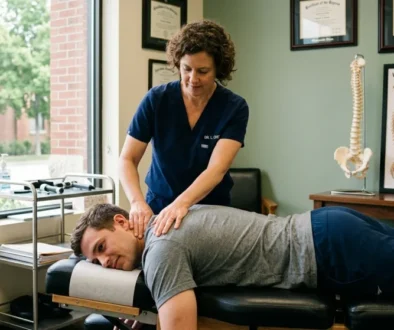
Chiropractic adjustments address joint fixations and pelvic misalignments caused by limping or altered biomechanics. When you limp, adjacent joints carry abnormal shear forces. Restoring full spinal and peripheral joint mobility reduces unnatural mechanical strain across the entire kinetic chain.
Pairing chiropractic adjustments alongside targeted physical therapy speeds up cellular healing. Soft tissue therapies like active release, dry needling, and instrument-assisted manual therapy break down restricting scar tissue. These modalities restore tissue elasticity so you can return to training safely.
Out-of-pocket costs for professional rehabilitation services vary based on treatment complexity:
- Initial clinical evaluations range from $120 to $250.
- Follow-up chiropractic adjustments cost between $50 and $100 per visit.
- Comprehensive physical therapy sessions average $100 to $200 without insurance coverage.
Working with experienced sports clinicians keeps your recovery targeted and efficient. Professional oversight helps you safely advance training loads, protecting your fitness while giving tissues time to recover completely.
FAQ
What is the fastest way to maintain cardiovascular fitness during a lower limb injury?
Deep water running and upper body ergometer intervals are the most effective ways to preserve endurance. These exercises allow you to train at high heart rate zones without placing mechanical impact on healing lower body structures. Aim for at least two high-intensity interval sessions per week.
How long can I stop training before muscle atrophy begins?
Measurable muscle atrophy and strength loss typically begin after two to three weeks of total inactivity. However, aerobic capacity declines faster, with noticeable drops in blood plasma volume occurring within 7 to 10 days. Early implementation of modified training prevents these rapid losses.
Is it safe to do heavy weightlifting with my uninjured arm or leg?
Yes, heavy resistance training on the healthy limb is safe and medically recommended. This practice utilizes cross-education to send electrical signals through the nervous system, preserving up to 18% of strength in the resting, injured side.
Can blood flow restriction training replace heavy lifting entirely?
BFR training effectively mimics heavy lifting by creating localized metabolic stress using loads as low as 20% to 30% of your maximum capacity. While it is ideal during early injury repair and recovery phases, you should reintroduce full mechanical loading once tissues heal.
How much protein should I eat while recovering from a sports injury?
You should consume between 1.6 and 2.2 grams of protein per kilogram of total body weight each day. Spacing this intake across 30 to 40 gram meals helps protect lean muscle mass and provides essential amino acids for tissue repair.
When should I consult a sports clinician regarding my injury progress?
You should consult a clinician immediately if you experience sharp pain, persistent swelling, joint instability, or severe compensation while walking. Early evaluation ensures you receive a structured diagnostic plan to train safely while healing.