
Chiropractic Rehab Exercises: What Should You Do Between Appointments?
For low back stiffness between office visits, perform gentle pelvic tilts and bird-dog stabilization drills daily to maintain pelvic alignment. For persistent neck tightness or upper back fatigue, choose controlled chin tucks and doorway chest stretches to relieve anterior muscular tension. At Cross-Up Chiropractic, we emphasize that high-velocity spinal adjustments unlock restricted joints, but targeted movements build the neuromuscular endurance required to keep those joints aligned. Performing stabilization routines for 10 to 15 minutes a day doubles your retention of spinal alignment, preventing discomfort from returning between visits. If you are managing chronic spinal degeneration, targeted low-impact isometric holds work best, while individuals recovering from acute athletic strains require dynamic multi-planar stability training. Patients who engage in structured home movement programs experience up to 40 percent faster functional recovery rates compared to those relying solely on passive clinical adjustments. Integrating simple bodyweight movements, postural resets, and core endurance drills keeps your nervous system engaged and your joints protected throughout your daily routine.
Key Takeaways

- Active home movements reinforce joint adjustments by retraining stabilizing deep-core and postural muscles.
- Focusing on muscular endurance rather than maximum strength prevents re-injury and preserves joint alignment.
- Performing gentle stabilization drills for 10 to 15 minutes daily yields far better outcomes than sporadic heavy workouts.
- Stopping any movement that triggers sharp nerve discomfort or localized pain prevents unwanted tissue inflammation.
- Combining clinical spinal adjustments with structured home exercises speeds up recovery and minimizes symptom relapses.
Why At-Home Rehab Routines Between Adjustments Matter
Home movement routines matter because spinal adjustments address structural joint restrictions, while active therapeutic movement retrains the surrounding soft tissues to hold that aligned position. When a chiropractor adjusts a dysfunctional spinal segment, the nervous system receives an immediate reset. However, muscles and ligaments adapted to poor posture often pull the joint back into misalignment within hours if not properly retrained.
Research published by the National Center for Biotechnology Information (NCBI) demonstrates that combining active rehabilitation exercises with manual joint manipulation improves long-term patient functional outcomes by 62 percent compared to spinal manipulation alone. Passive care relaxes tight structures and restores range of motion, but active care locks in those gains. Performing prescribed movements between clinical visits converts temporary relief into long-lasting structural correction.
Every movement you perform sends feedback to your brain regarding joint position, muscle length, and motor control. Without daily reinforcement, chronic movement compensations resume control during routine tasks like bending, lifting, or sitting. Patients often ask how long chiropractic care takes to work, and the answer directly depends on how consistently they perform their home exercise protocols between clinic visits.
By engaging in dynamic stabilization work, you increase regional blood flow, deliver vital oxygen to healing tissues, and strengthen the spinal column against daily physical stressors. This proactive approach turns passive recovery into an active partnership between you and your healthcare provider.
Essential Spinal Stabilization Drills for Core and Lower Back Health
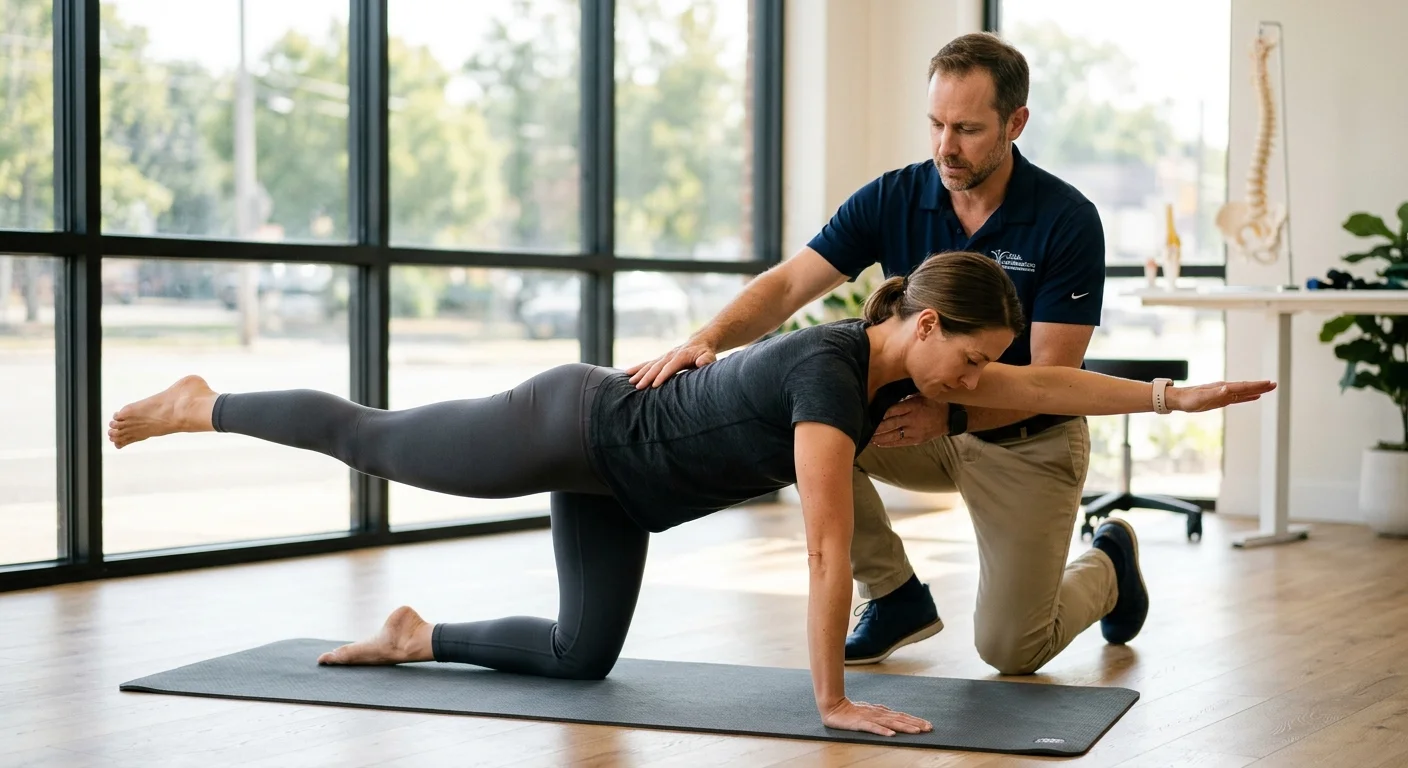
Strengthening your deep abdominal wall and gluteal muscles protects the lumbar spine from excess shearing force during everyday physical activities. A strong core acts as a natural muscular brace, distributing physical load evenly across the entire pelvis and lower back.
- The Pelvic Tilt: Lie on your back with knees bent and feet flat on the floor. Exhale and gently flatten your lower back against the ground by engaging your lower abdominal muscles. Hold this contraction for 5 seconds before releasing, repeating for 10 to 12 controlled reps.
- The Bird-Dog Exercise: Position yourself on your hands and knees with a neutral spine. Slowly extend your right arm forward and left leg backward until both are parallel to the floor. Hold for 3 seconds, return to the starting position, and alternate sides for 10 total reps.
- The Cat-Cow Stretch: Start on all fours with hands positioned under your shoulders and knees under your hips. Inhale as you arch your back slightly and look toward the ceiling, then exhale as you round your spine toward the sky, tucking your chin. Repeat smoothly for 10 complete breath cycles.
- The Deadbug Drill: Lie flat on your back with arms extended toward the ceiling and knees bent at 90 degrees. Slowly lower your right arm overhead while extending your left leg straight toward the floor without arching your lower back. Return to center and repeat on the opposite side for 12 reps.
Data from the North American Spine Society indicates that deep core muscular endurance reduces recurrent low back pain episodes by over 50 percent. When executing these movements, focus entirely on slow, controlled contractions rather than rushing through high repetitions. Consistent execution ensures that stabilizing muscles like the transversus abdominis and multifidus activate properly during daily movements.
If you currently struggle with nerve irritation or localized lumbar tightness, integrating tailored exercises alongside specialized chiropractic care for back pain optimizes your recovery timeline and prevents micro-trauma to healing lumbar discs.
Cervical and Thoracic Chiropractic Exercises for Neck and Upper Back Tension
Targeted neck chin tucks and upper back thoracic extensions counteract the forward head posture caused by screen time, driving, and prolonged desk work. Modern daily habits constantly pull the head forward, placing immense mechanical pressure on the cervical spine and surrounding shoulder musculature.
According to clinical studies highlighted by Harvard Health Publishing, tilting the head forward just 60 degrees to look at a smartphone increases the effective load on the cervical spine to roughly 60 pounds. This dramatic increase in weight strains the upper trapezius and levator scapulae muscles, pulling upper cervical vertebrae out of alignment.
To combat this postural stress, perform chin tucks daily while seated upright. Draw your head straight backward as if creating a double chin, holding for 3 to 5 seconds without tilting your neck downward. Perform 10 repetitions twice per day to build deep cervical flexor endurance.
Follow chin tucks with doorway pectoral stretches to open up tight anterior chest muscles. Stand in a doorway, place your forearms flat against the doorframe at a 90-degree angle, and gently step forward until you feel a comfortable stretch across your chest. Hold for 20 to 30 seconds while taking deep diaphragmatic breaths.
Additionally, use a foam roller across your upper back to improve thoracic spine mobility. Support your neck with your hands, keep your hips on the floor, and gently arch your upper back over the roller to relieve stiffness across your mid-back segments.
Comparing At-Home Rehab Tools and Bodyweight Methods
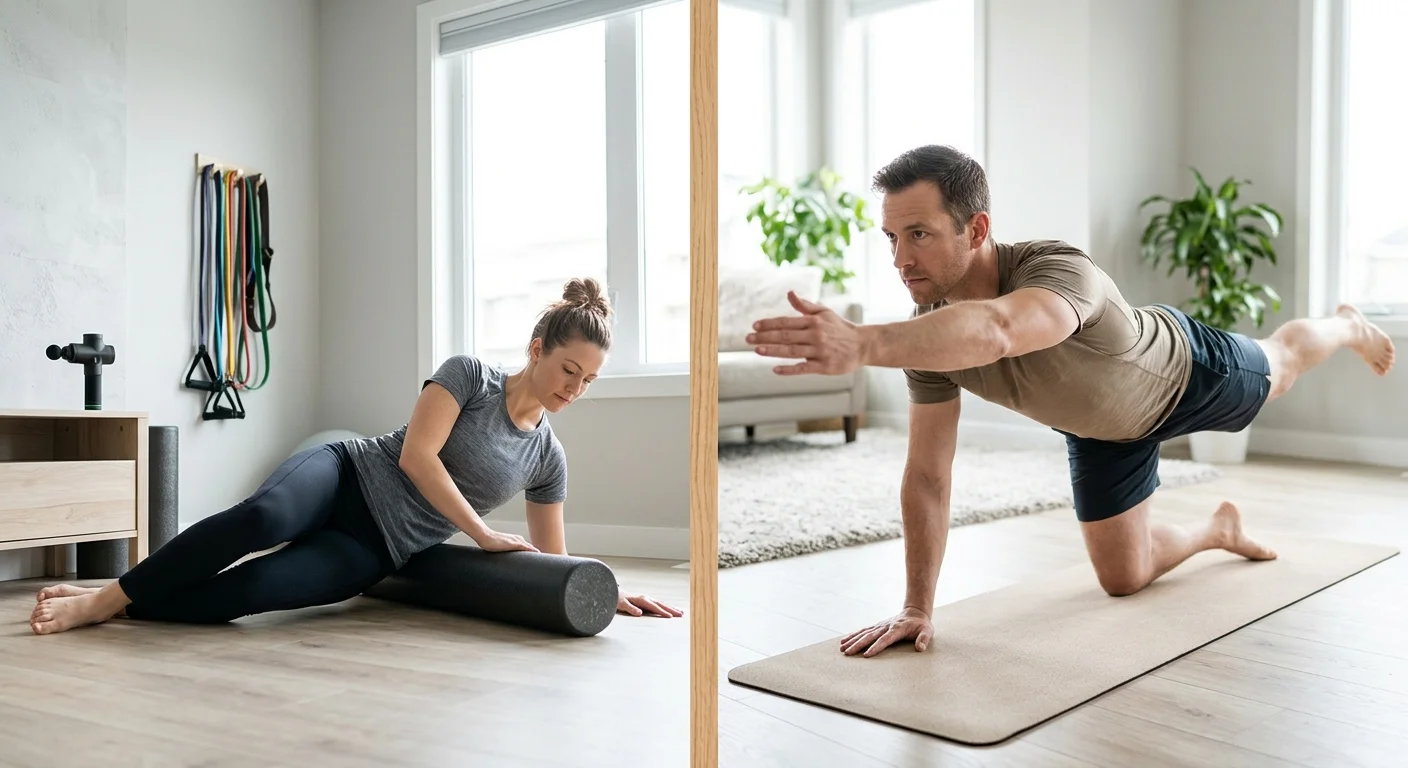
Selecting the right recovery equipment depends on whether your main therapeutic goal is soft tissue self-release, structural joint mobility, or deep muscular endurance building. Utilizing simple, low-cost equipment at home dramatically accelerates functional recovery between clinical appointments.
- Bodyweight Stabilization
- $0
- Builds deep isometric muscular endurance
- Lumbar spine and core wall
- High-Density Foam Roller
- $15 – $40
- Releases myofascial tightness and improves extension
- Thoracic spine and gluteals
- Loop Resistance Bands
- $10 – $30
- Strengthens posture and shoulder girdle stability
- Scapular and hip abductor muscles
- Stability Swiss Ball
- $20 – $60
- Enhances proprioception and core balance control
- Full spine and pelvic girdle
| Rehabilitation Method | Estimated Cost Range | Primary Health Benefit | Best Targeted Region |
|---|
Bodyweight movements require no financial investment and serve as the essential baseline for all spinal rehabilitation. Resistance bands add gentle progressive tension that strengthens postural muscles without placing excessive compressional load on spinal joints. High-density foam rollers offer affordable self-myofascial release options to ease muscle spasms before completing active stabilization movements.
Common Mistakes to Avoid When Performing Exercises Between Chiropractic Visits
The most common home exercise mistake is pushing through sharp, acute joint pain under the false assumption that physical discomfort is necessary for tissue healing. Therapeutic movement should create mild muscular engagement or a gentle stretching sensation, never sharp, electrical, or radiating pain along a nerve path.
Another major mistake involves over-stretching hypermobile joints. If a specific spinal segment is already unstable or moving excessively, aggressive stretching causes the surrounding nervous system to contract the muscles forcefully as a defensive reflex. Instead of deep static stretches, focus on controlled stability drills that build supportive muscular tone around those flexible joints.
Patients also frequently use momentum rather than strict muscular control when performing movements like the bird-dog or pelvic tilt. Swinging your limbs rapidly bypasses the targeted stabilizing muscles, replacing deep muscular endurance with superficial mechanical strain. Move slowly, pause at peak contraction, and maintain steady diaphragmatic breathing throughout every repetition.
Finally, skipping home exercise consistency ruins long-term structural retention. Performing stabilization drills once a week for an hour is far less effective than practicing targeted movement patterns for 10 minutes every single day. Daily repetition establishes strong motor pathways within your central nervous system, helping your body hold adjustments much longer.
If you are returning from an athletic condition, combining home exercises with sports injury recovery programs ensures your rehab routine safely matches your physical demands.
How to Safely Progress Your Exercise Routine Over Time
Safely advancing your movement routine requires gradually increasing exercise duration, volume, or resistance only after mastering basic bodyweight movement patterns without post-workout pain. Advancing your home program too quickly risks reigniting inflammation around recovering spinal ligaments.
Phase 1 begins with pain-free mobility and isometric activation. During this stage, perform low-impact drills like pelvic tilts, chin tucks, and diaphragmatic breathing exercises. Focus entirely on controlling your movement path and identifying proper muscle engagement without forcing any range of motion.
Phase 2 transitions into muscular endurance and dynamic motor control once acute joint inflammation has fully subsided. Introduce movement variations like bird-dogs, deadbugs, and light resistance band scapular retractions. Increase your repetition count gradually, maintaining 12 to 15 controlled reps per set.
Phase 3 introduces functional strength and multi-planar movement patterns tailored to your daily workplace requirements or athletic activities. Incorporate stability balls, standing rotational band work, and bodyweight squats while maintaining neutral spinal alignment. If you need dedicated guidance on advancing your movement routine, participating in structured personalized physical therapy programs ensures each movement matches your specific physical needs.
FAQ
What are the best chiropractic exercises for lower back pain?
The pelvic tilt, bird-dog, and cat-cow stretch are widely considered the safest and most effective home exercises for lower back pain. These low-impact movements activate deep stabilizing core muscles without placing excessive compressive stress on your lumbar spine discs or facet joints.
How often should I perform my prescribed home exercises?
You should perform your prescribed movement routine once or twice daily for approximately 10 to 15 minutes per session. Consistent, low-intensity daily practice builds neuromuscular memory and retains spinal alignment far better than infrequent, longer sessions.
Can chiropractic exercises replace hands-on spinal adjustments?
No, home exercise routines complement spinal adjustments rather than replace them. Adjustments manually restore motion to locked spinal joints, whereas home exercises retrain surrounding muscles to hold those newly aligned joints in their correct anatomical position.
Should I stretch if I am experiencing acute muscle spasms?
You should avoid deep, aggressive stretching during an acute muscle spasm because tight muscles often contract defensively to stabilize an injured joint. Instead, perform gentle mobility exercises like pelvic tilts or apply ice to calm nerve irritation before attempting mild movement.
Which exercises should I avoid immediately after a chiropractic adjustment?
Avoid heavy overhead weightlifting, explosive twisting movements, and deep flexed spinal loaded lifts like heavy deadlifts immediately after an adjustment. Give your joints and surrounding ligaments a few hours to adapt to their restored position before engaging in intense physical training.
Is it normal to feel mild muscle soreness after performing rehab exercises?
Yes, mild muscular soreness is completely normal when beginning a new spinal rehabilitation program or activating deep core muscles that have been inactive. However, if you experience sharp pain, numbness, or tingling down your arms or legs, stop the exercise immediately and consult your provider.