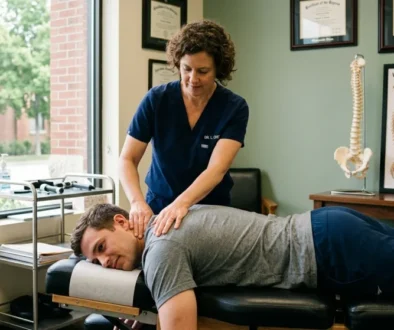

Sports Injury Recovery: How Chiropractic Care and Physical Therapy Work Together
For acute joint restriction or spinal misalignment, chiropractic adjustments offer immediate pain relief and restored motion; for muscular imbalances, weakness, or movement dysfunction, physical therapy provides the necessary functional retraining. However, for complete sports injury recovery and long-term joint health, combining a chiropractor and physiotherapy yields the fastest and most permanent outcomes. Chiropractic care realigns restricted joints and calms nerve irritation, creating an optimal “window of opportunity” where therapeutic exercise can effectively rebuild supporting muscles. Instead of treating joint structure and soft tissue in isolation, integrating these disciplines ensures you repair the underlying framework while strengthening the active muscles that hold everything together.
Key Takeaways
- Dual-Action Healing: Chiropractic adjustments fix structural joint restrictions, while physical therapy builds muscular strength and endurance to lock those structural improvements in place.
- Faster Recovery Timelines: Combining joint mobilization with functional movement training reduces overall recovery time for acute sports injuries compared to single-modality care.
- Drastic Reduction in Opioid Use: Patients seeking early conservative care from a chiropractor and physical therapist are up to 89% less likely to require prescription opioids for spinal pain.
- Root-Cause Resolution: Joint manipulation relieves immediate pain signals, allowing patients to execute active physical therapy exercises without compensatory movement patterns.
- Long-Term Prevention: Active rehabilitation retrains motor control and corrects posture, preventing recurring injuries and chronic wear-and-tear.
Understanding the Structural and Functional Differences Between a Chiropractor and Physiotherapy
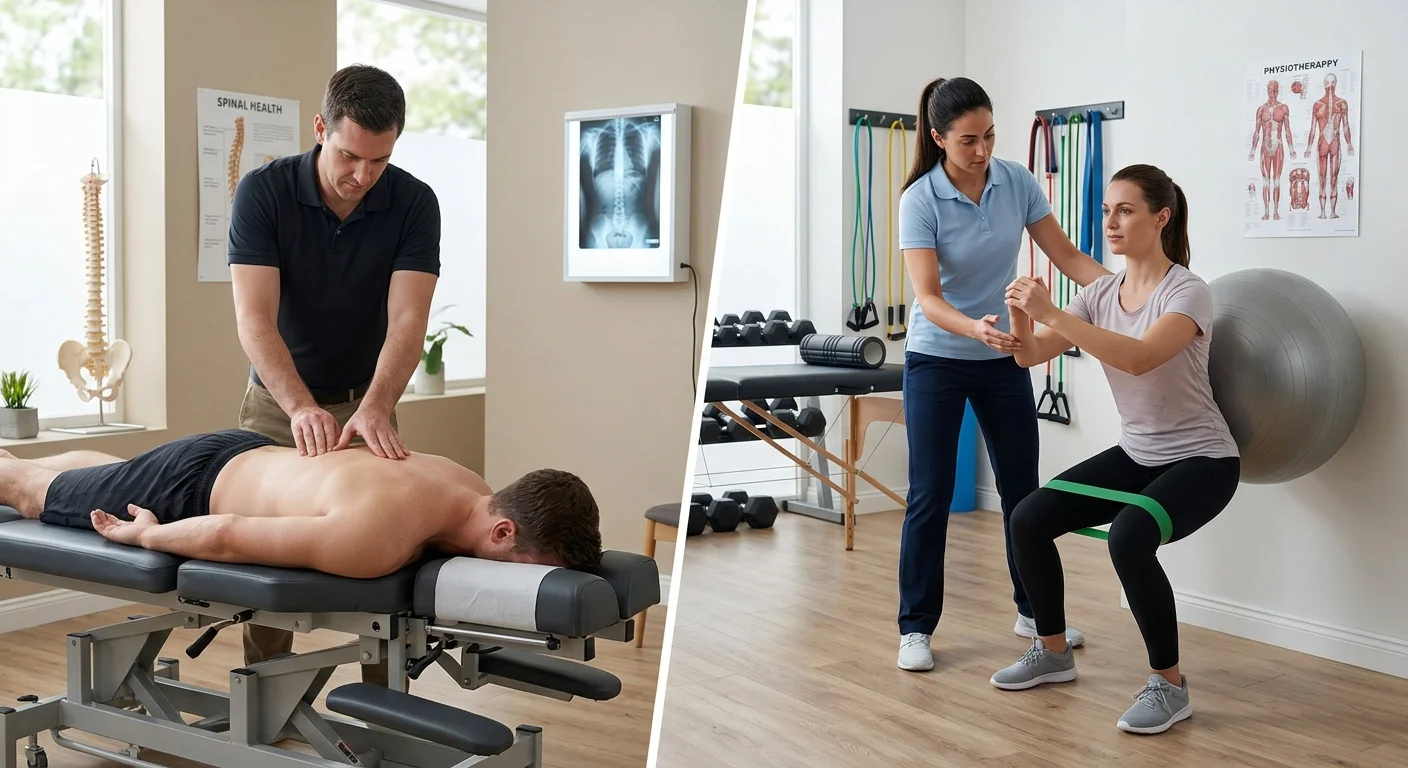
Chiropractic care focuses primarily on joint alignment and nervous system optimization, whereas physiotherapy prioritizes muscular strength, flexibility, and functional movement patterns. When you experience an injury, your body reacts with both structural restrictions and muscular compensations. A chiropractor utilizes targeted manual adjustments to address hypomobile or misaligned joints, particularly along the spine, pelvic girdle, and peripheral extremities. Restoring proper articular motion reduces local inflammation and removes pressure from surrounding peripheral nerves.
Conversely, physical therapy centers on active rehabilitation. A physical therapist evaluates how soft tissue structures—such as tendons, ligaments, and skeletal muscle—work together to produce movement. They prescribe specific stretching routines, eccentric strength loading, and stabilization exercises to address muscle inhibition, tissue scarring, and postural imbalances. Understanding the distinction between treatments is easier when reviewing our detailed guide on chiropractor vs. physical therapist differences, but clinically, these two approaches represent two sides of the same coin.
In terms of clinical investment, out-of-pocket costs for standalone chiropractic care typically range from $80 to $150 per visit, whereas physical therapy sessions range between $100 and $250 depending on specialized equipment and manual therapy requirements. When combined in an integrated plan, patients often complete fewer total sessions overall because joint corrections remain stable longer when reinforced by functional exercise.
Why Combining Chiropractic Care and Physical Therapy Accelerates Sports Injury Recovery
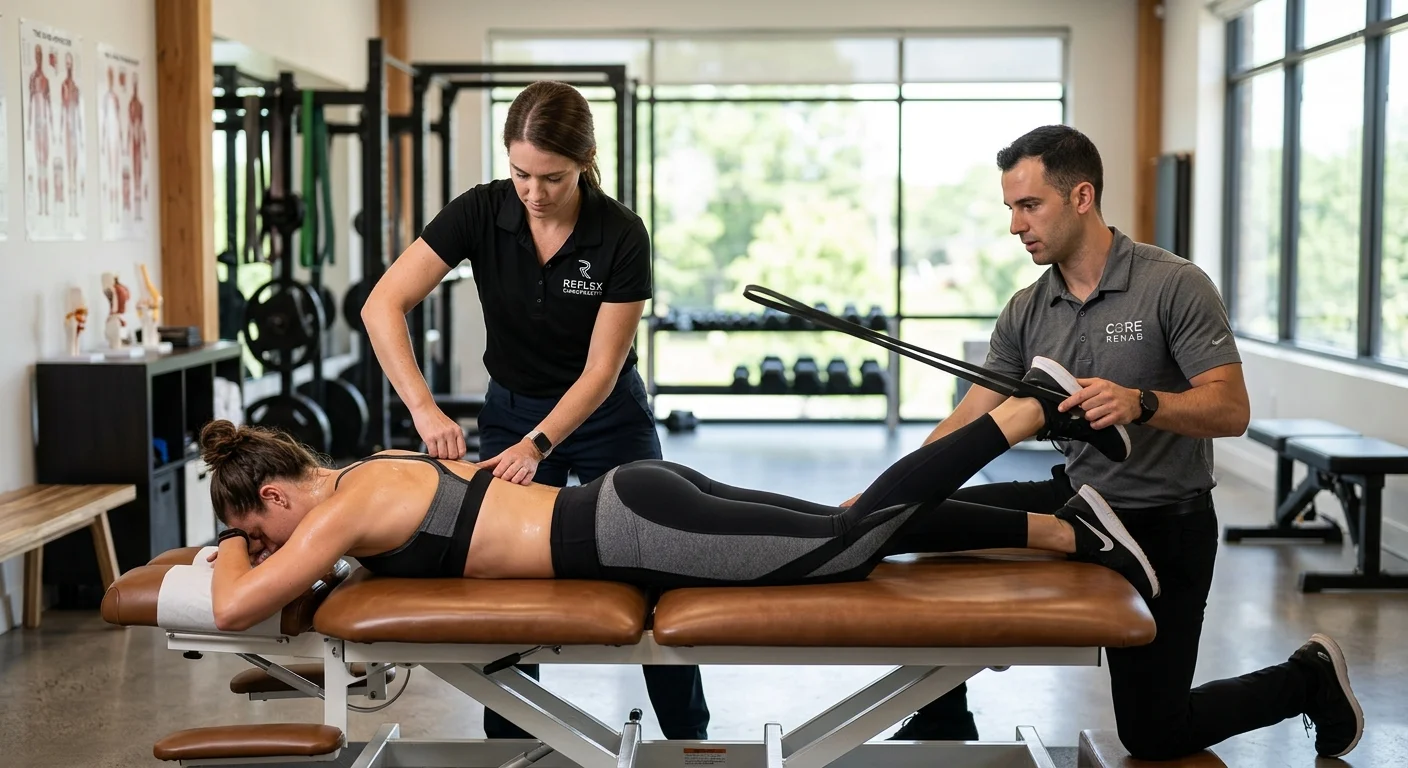
Combining chiropractic care and physical therapy speeds up injury recovery because joint realignment restores normal range of motion, allowing muscular stabilization exercises to target the correct biomechanical chains immediately. When an athlete sprains an ankle, herniates a spinal disc, or suffers a shoulder impingement, the brain alters muscle activation to protect the damaged area. This protective guarding leads to altered biomechanics, joint stiffness, and chronic strain on adjacent body parts.
If you perform active exercises on a joint that is mechanically stuck, your body continues to build strength on top of a broken movement pattern. By receiving a chiropractic adjustment first, you unlock the restricted joint and reset normal sensory feedback to the brain. Once the joint moves freely, integrated physical therapy services step in to recruit dormant muscle fibers, break down scar tissue, and retrain proper movement patterns.
The health economic benefits of choosing active conservative care first are substantial. According to healthcare research published in Health Affairs, US healthcare expenditures for lower back and neck pain exceed $134.5 billion annually, making spinal conditions one of the most expensive medical categories in the nation. Furthermore, a peer-reviewed investigation in BMJ Open revealed that patients who utilized chiropractic or physical therapy care first for acute back pain reduced their risk of filling an opioid prescription by 89% and lowered their odds of requiring invasive surgery by 55%.
Comparison Matrix: Chiropractic Care vs Physiotherapy vs Integrated Active Rehab
Integrated care provides a complete solution by blending joint manipulation with muscular re-education. The following table highlights how each clinical modality functions independently and how they perform when combined into an active rehabilitation approach.
| Treatment Modality | Primary Target Area | Primary Treatment Methods | Key Clinical Outcome |
|---|---|---|---|
| Chiropractic Care | Joint articular mechanics, spinal column, nervous system balance | High-velocity low-amplitude (HVLA) adjustments, joint mobilization, drop-table techniques | Immediate pain reduction, restored joint range of motion, decreased nerve pressure |
| Physiotherapy | Skeletal muscle, fascia, tendons, functional movement chains | Therapeutic exercise, eccentric loading, gait training, active neuromuscular re-education | Improved muscular strength, joint stability, mobility endurance, tissue scar remodeling |
| Integrated Active Rehab | Complete neuro-musculoskeletal system and global movement mechanics | Joint realignment followed immediately by targeted active rehabilitation and stabilization | Rapid recovery, long-term functional stability, minimal reinjury risk, optimal athletic performance |
Step-by-Step Protocol for an Integrated Active Rehabilitation Plan
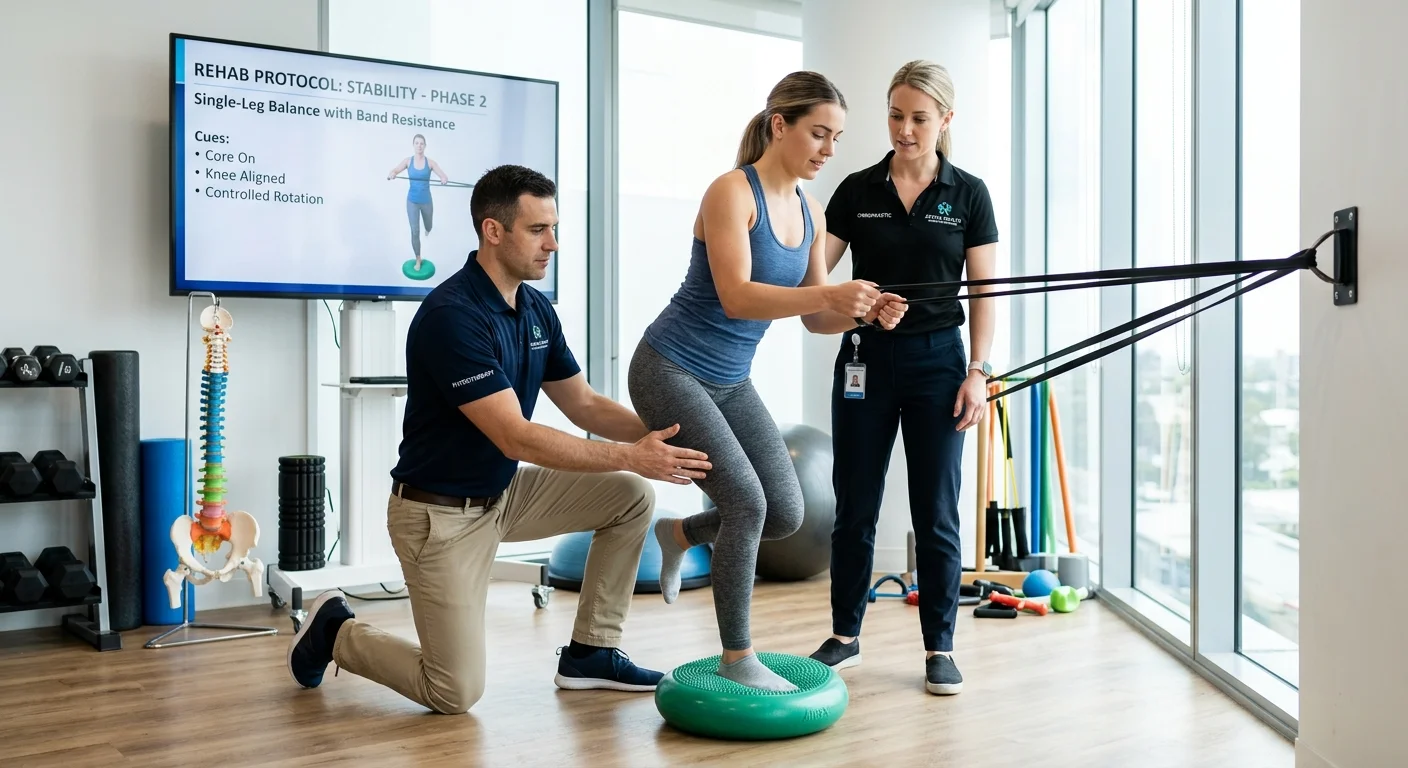
An integrated active rehabilitation plan follows a systematic, progressive sequence designed to transition patients from acute symptom management to full functional strength. Treating an active injury without a structured protocol often leads to premature return-to-activity and high reinjury rates.
- Comprehensive Functional Assessment: Doctors evaluate global movement quality, localized joint mobility, muscle firing patterns, and neurological function to identify exact dysfunction sites.
- Acute Joint Unlocking and Decompression: Gentle chiropractic adjustments or traction techniques clear joint fixations, reducing local mechanical pressure and immediate pain signals.
- Soft Tissue and Myofascial Release: Targeted soft tissue therapies, such as instrument-assisted manual therapy or trigger point therapy, reduce muscle spasm and break up collagen adhesions around the affected joint.
- Neuromuscular Re-Education: Specialized active physical therapy drills retrain motor pathways, helping the central nervous system learn how to stabilize the newly restored joint range of motion.
- Progressive Resistance Loading: Patients perform progressive eccentric and concentric strength training to build structural resilience across tendons, ligaments, and muscle bellies.
- Sport-Specific or Daily-Living Maintenance: Advanced functional exercises simulate real-world demands, ensuring high-level agility, endurance, and biomechanical safety.
Relying solely on imaging to dictate treatment strategy is a common medical mistake. Research published in PubMed Central indicates that over 60% of completely pain-free adults possess bulging spinal discs or disc degenerations on MRI scans. Integrated clinical care focuses on treating functional movement patterns and actual pain triggers rather than relying strictly on static imaging photos.
Common Conditions Best Treated by a Combined Chiropractor and Physiotherapist Approach
Conditions involving both articular restriction and soft tissue weakness respond best to a dual chiropractic and physical therapy protocol. When both systems receive targeted care, healing rates improve dramatically across several complex diagnoses.
Lower Back Pain and Sciatica
Lumbar spine misalignments and disc herniations frequently compress the sciatic nerve, causing sharp, radiating leg pain. Chiropractic spinal adjustments decompress the lumbar nerve roots and reduce intradiscal pressure. Concurrent physical therapy strengthens the deep abdominal core, transversus abdominis, and multifidus muscles, creating an internal “muscular brace” that prevents the vertebrae from shifting back into painful positions.
Rotator Cuff and Shoulder Impingement
Shoulder mobility depends heavily on proper thoracic spine extension and scapular movement. A chiropractor restores normal movement to restricted upper back joints and the acromioclavicular (AC) joint. Following alignment, physical therapy strengthens the lower trapezius, serratus anterior, and rotator cuff tendons to maintain open joint space during overhead movements.
Knee Pain and Plantar Fasciitis
Foot and knee pain often stems from dysfunctions further up the kinetic chain, such as pelvic tilting or loss of ankle dorsiflexion. Adjustments to the foot, ankle, and pelvis restore proper weight distribution. Therapeutic exercises then target hip abductor strength and foot arch activation to absorb impact forces efficiently during walking or running.
Public health reports from the Centers for Disease Control and Prevention (CDC) show that conservative functional care significantly improves long-term quality of life metrics while cutting chronic disability risks for complex soft tissue and joint pain.
Expert Advice: Professional Recommendations and Mistakes to Avoid in Dual Therapy
To maximize benefits from combined chiropractic care and physical therapy, schedule your treatments in the correct order: perform joint adjustments first to restore structural alignment, followed by active physical therapy exercises within 24 to 48 hours. Performing heavy strengthening exercises on an unadjusted, mechanically restricted joint reinforces compensation patterns and prolongs recovery timelines.
A major mistake patients make is relying exclusively on passive modalities like heating pads, electrical stimulation, or spinal adjustments while neglecting active rehabilitation. Passive treatments provide rapid pain relief, but long-term tissue adaptation requires physical work. You must actively load muscles and tendons to rebuild structural tension capacity. Knowing key warning signals—such as persistent joint catching, lingering weakness, or sharp localized pain—can help you determine when to consult a sports injury chiropractor for an integrated active rehab assessment.
FAQ
Can you see a chiropractor and a physical therapist at the same time?
Yes, combining both disciplines is safe and highly effective for most musculoskeletal conditions. Utilizing chiropractic care for joint mechanics alongside physical therapy for muscle strengthening accelerates overall healing and prevents reinjury.
How does a chiropractor and physiotherapy treatment session sequence work?
Typically, a practitioner performs chiropractic adjustments first to unlock restricted joints and decrease local pain signals. Immediately after, or within a day, the patient completes active physical therapy exercises to train surrounding muscles to support that corrected alignment.
Which is better for sports injuries: chiropractic or physical therapy?
Neither is inherently better, as they address different components of an injury. Chiropractic care excels at restoring joint mechanics and easing acute nerve pressure, while physical therapy rebuilds muscular strength and functional movement chains. Combining them offers optimal athletic rehabilitation.
What is the typical cost of combining chiropractic care and physical therapy?
Individual chiropractic visits usually range between $80 and $150, while physical therapy sessions run between $100 and $250. Integrated active rehabilitation plans often reduce overall healthcare expenses by resolving root causes faster and minimizing the total number of visits needed.
Is active rehab safe for herniated discs and sciatica?
Yes, active rehabilitation is widely recognized as a safe, first-line conservative approach for disc herniations and sciatica. Gentle spinal decompression combined with core stabilization exercises reduces disc pressure and alleviates nerve irritation without requiring surgery.
When should I transition from acute care to active physical therapy exercises?
You can begin active exercises as soon as acute joint blockages are cleared and sharp, localized pain subsides into a manageable ache. Your care team will progress you from gentle isometric holds to active dynamic strength training based on your recovery tolerance.