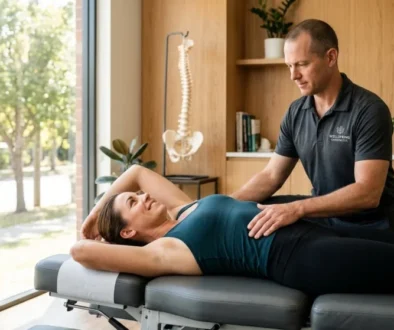

What Is Active Release Therapy and How Is It Used for Sports Injuries?
For athletes dealing with soft tissue tightness, chronic scar tissue, or nerve entrapment — choose Active Release Therapy (ART). For general muscular fatigue without movement restrictions — choose standard Swedish or relaxation massage. Active Release Therapy stands out because it combines precisely targeted manual pressure from a trained provider with active movement performed by the patient. Overused muscles undergo continuous micro-trauma, leading to reduced oxygen supply (hypoxia) and dense, fibrous scar tissue adhesions. These adhesions cause muscles to shorten, irritate neighboring tendons, and compress nerve pathways. By tensioning the affected muscle while you guide the limb through a full range of motion, an ART practitioner physically breaks down these internal restrictions, restores optimal blood flow, and re-establishes normal mechanical glide between tissue layers. Whether you suffer from chronic hamstring tightness, tennis elbow, or shoulder impingement, active release techniques provide faster functional recovery than passive soft tissue modalities alone.
Key Takeaways
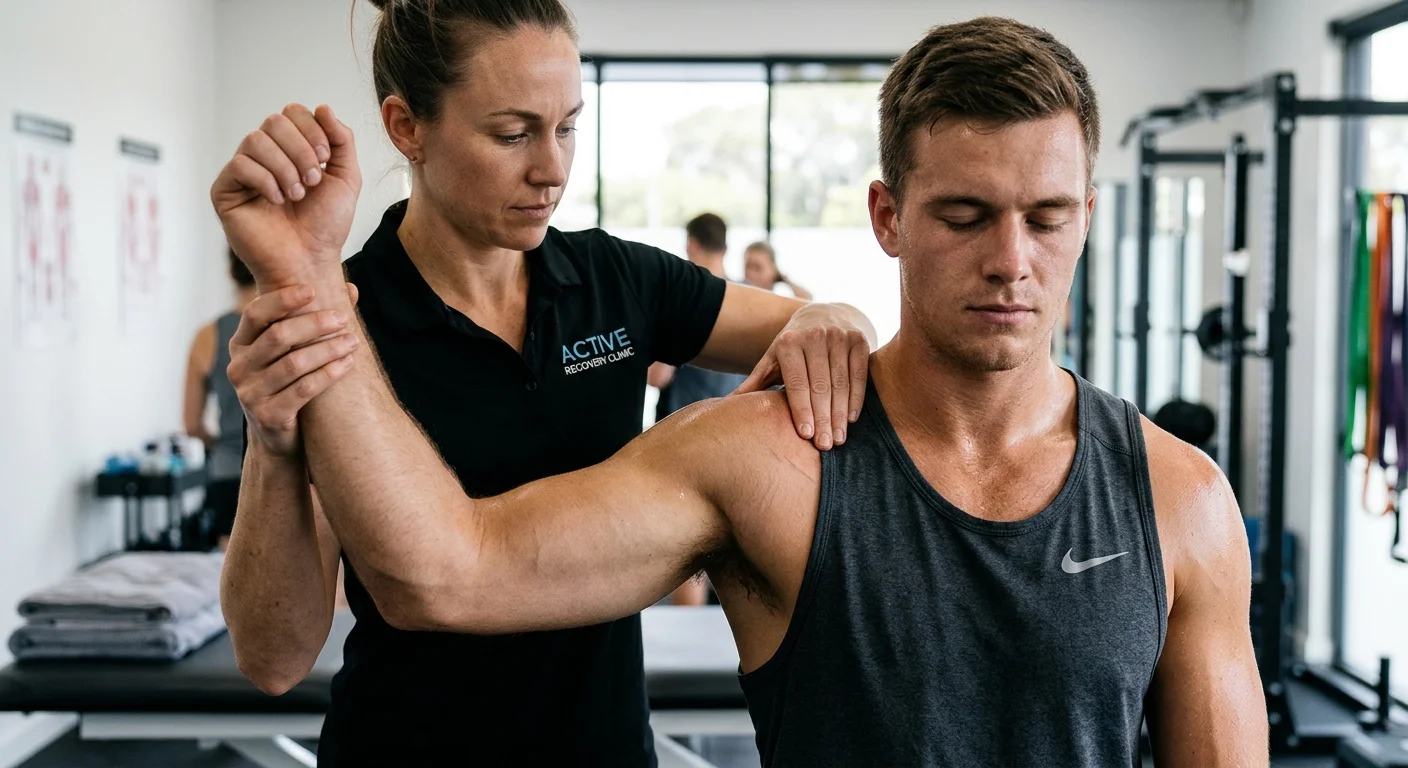
- Active Release Therapy (ART) combines targeted physical tension with patient-directed movement to break down deep soft tissue scar tissue.
- The protocol effectively resolves overused muscles, tendonitis, nerve entrapment, and repetitive strain injuries common in athletics.
- Unlike passive deep tissue massage, ART requires your physical movement during treatment to stretch and shear binding tissue layers.
- Most acute and chronic sports injuries show dramatic functional progress within three to six sessions, typically costing $80 to $150 per visit.
- Combining ART with chiropractic adjustments and targeted exercise speeds up injury recovery and prevents future re-injury.
What Is Active Release Therapy and How Does It Function?
Active Release Therapy is a specialized, patented soft tissue management system designed to locate and break down restrictive scar tissue adhesions in muscles, tendons, ligaments, fascia, and nerves. Developed by Dr. P. Michael Leahy, this soft tissue therapy addresses tissue dysfunction caused by repetitive stress, acute trauma, or persistent inflammation. When soft tissue suffers damage, the body responds by laying down dense collagen fibers to patch the injured area. Over time, these fibrous bands stick neighboring tissue layers together, creating painful restrictions that limit your normal athletic performance.
Every athletic movement relies on smooth gliding actions between distinct layers of muscle and fascia. Repetitive strain from running, lifting, or throwing creates micro-tears in muscle fibers. When these micro-tears heal improperly under low-oxygen conditions (hypoxia), sticky scar tissue builds up. Research published by the National Center for Biotechnology Information demonstrates that soft tissue manipulation techniques significantly improve joint range of motion and reduce localized pain by disrupting abnormal myofascial restrictions. Without intervention, these adhesions shorten muscle structures, alter joint mechanics, and pull excessively on tendons, eventually triggering chronic conditions like patellar tendonitis or plantar fasciitis.
The core mechanism of what is active release technique centers on direct mechanical shearing. Certified ART providers use over 500 specific clinical protocols to evaluate muscle texture, tightness, and structural slide. The practitioner places precise manual contact over the target restriction while you move your body through a specific anatomical pathway. This combination forces the bound tissue to slide under direct tension, freeing trapped nerves and restoring natural elasticity to damaged muscle groups.
Active Release Technique vs. Other Manual Therapies
Active Release Technique differs fundamentally from conventional soft tissue treatments due to its interactive movement dynamic and focus on anatomical glide. While traditional massage therapy relies on broad, passive strokes to relax tense surface muscles, ART targets deep structural adhesions through specific movement vectors. The table below outlines how ART compares directly against other common recovery modalities used in sports rehabilitation.
| Treatment Modality | Primary Mechanism | Patient Participation Role | Best Used For |
|---|---|---|---|
| Active Release Technique (ART) | Direct manual tension combined with active anatomical lengthening | Active movement through full range of motion | Adhesions, repetitive strain, nerve entrapment, sports injuries |
| Deep Tissue Massage | Passive longitudinal pressure across muscle fibers | Passive resting on treatment table | General muscular tension, stress relief, broad muscle soreness |
| Graston Technique (IASTM) | Stainless steel instruments scraped along skin surface | Mostly passive with occasional movement | Superficial scar tissue, chronic tendonitis, dense fascial thickening |
| Myofascial Release | Sustained, low-load manual pressure into fascial restrictions | Passive resting with deep breathing | Widespread fascial tightness, systemic stiffness, fibromyalgia |
Understanding these distinctions helps you choose the right care for your recovery goals. Passive modalities excel at relaxing overactive nerve pathways and increasing surface circulation. However, when scar tissue mechanically tethers two distinct muscle bellies together, passive rubbing cannot generate the directional shear forces needed to break those bands apart. By incorporating active joint motion while maintaining deep point pressure, an ART therapist opens up stuck fascial planes far more effectively than standard relaxation methods. If you are comparing care options, exploring manual therapy techniques can clarify how soft tissue mobilization complements your broader rehabilitation path.
How Chiropractor Active Release Technique Treats Sports Injuries
Integrating chiropractor active release technique into an athletic care plan resolves soft tissue restrictions while simultaneously correcting joint misalignment. When soft tissue adhesions draw joints out of alignment, spinal and extremity adjustments provide only temporary relief if the tight muscle continues to pull on the bone. Conversely, releasing tight muscles without stabilizing joint mechanics leaves the tissue vulnerable to recurrent strain. Combining ART therapy chiropractic methods ensures both structural components work together seamlessly.
A study indexed in the British Journal of Sports Medicine highlights that multi-modal rehabilitation strategies—combining targeted soft tissue work with joint mobilization—yield faster return-to-play timelines for competitive athletes compared to single-treatment approaches. Professional sports teams heavily rely on ART to treat acute muscle pulls, hamstring strains, shoulder impingement, and calf contractures right on the sideline. Working with experienced sports medicine specialists allows athletes to address soft tissue restrictions before minor tightness escalates into a season-ending tear.
During sports activities, soft tissues undergo rapid eccentric loads that increase the risk of internal micro-trauma. When a sprinter drives off the block or a swimmer rotates their shoulder overhead, dense adhesions prevent muscle fibers from lengthening smoothly. The practitioner identifies the bound structure, applies precise contact tension, and instructs the athlete to perform the exact joint extension or flex pattern that reproduces tissue glide. This immediate restoration of normal muscle length reduces strain on adjacent tendons and joint capsules. Athletes interested in comprehensive injury management often combine these techniques as part of integrated sports injury recovery strategies.
What to Expect During an ART Therapy Session
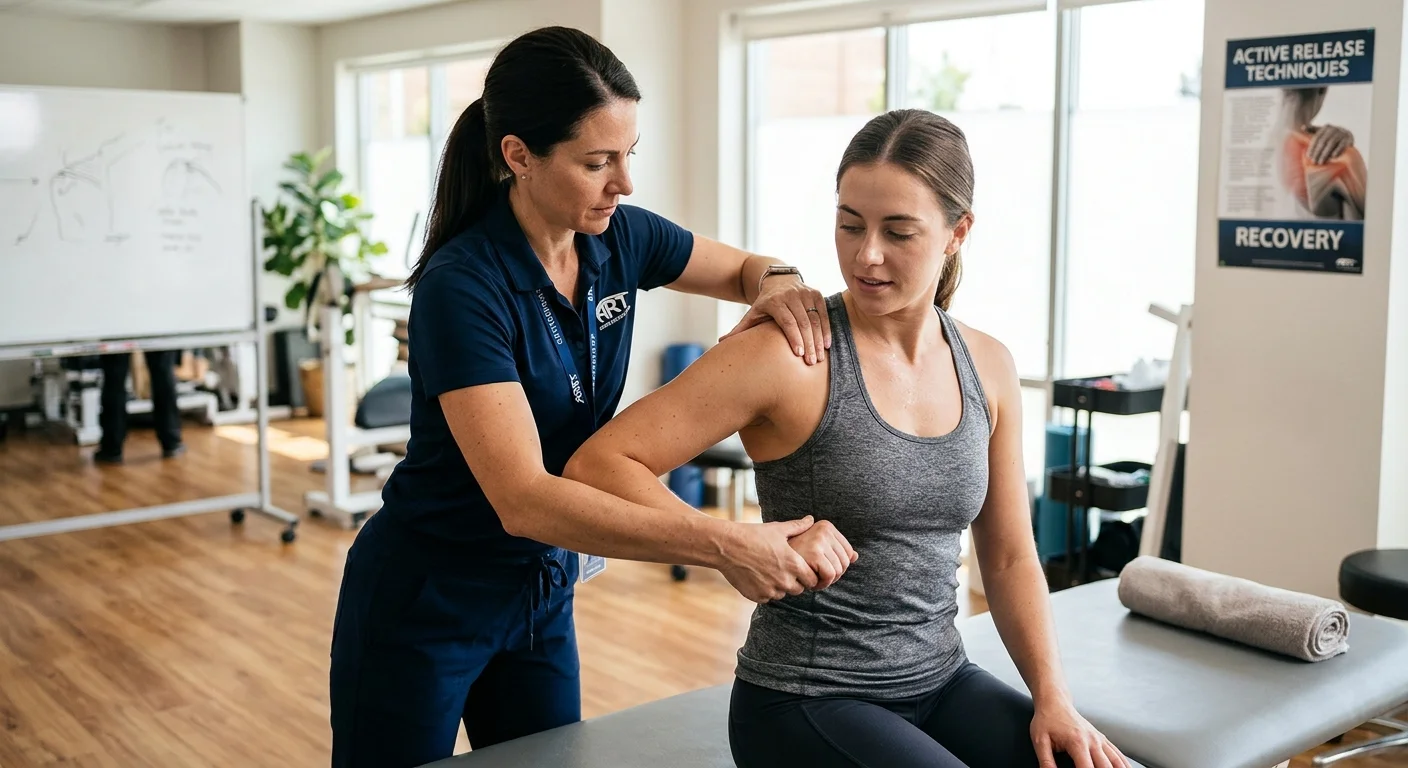
An Active Release Therapy session operates as both a diagnostic evaluation and a therapeutic intervention during every appointment. Your practitioner uses their hands to assess the texture, flexibility, and movement of your soft tissues, immediately pinpointing subtle adhesions that imaging scans often miss. Expect a hands-on session that feels intense yet deeply therapeutic as restrictions break down under targeted tension.
Every structured ART session follows a systematic four-step process to ensure precise treatment of injured soft tissues:
- Functional Movement Assessment: The practitioner examines your active range of motion, identifying specific movement angles that provoke tightness, pain, or mechanical restriction.
- Tissue Palpation and Target Identification: Using precise hand pressure, the provider scans individual muscle groups, tendons, and nerve pathways to locate dense scar tissue adhesions.
- Contact Application and Active Lengthening: The practitioner applies firm, directional manual tension over the restricted tissue while guiding your limb through an active lengthening movement.
- Re-Testing and Mobility Re-Evaluation: Immediately following the treatment passes, you perform the movement again to verify improvements in range of motion and pain reduction.
Standard ART sessions typically cost between $80 and $150 per visit when paid out-of-pocket, depending on regional market rates and provider expertise. Many chiropractic clinics integrate ART directly into comprehensive treatment plans covered partially by health insurance plans. Most soft tissue conditions respond rapidly, requiring only three to six focused sessions to restore functional tissue mobility.
Expert Tip: A common mistake patients make after an ART session is engaging in heavy strength training or aggressive passive stretching immediately following treatment. Newly freed muscle fibers require 24 to 48 hours of light active recovery and hydration to adapt to their newly restored length. Aggressive straining right after therapy can trigger protective muscle guarding and delay healing. To better understand treatment schedules and functional timelines, review our guide on how long chiropractic care takes to work.
Common Athletic Conditions Treated by Active Release Therapy
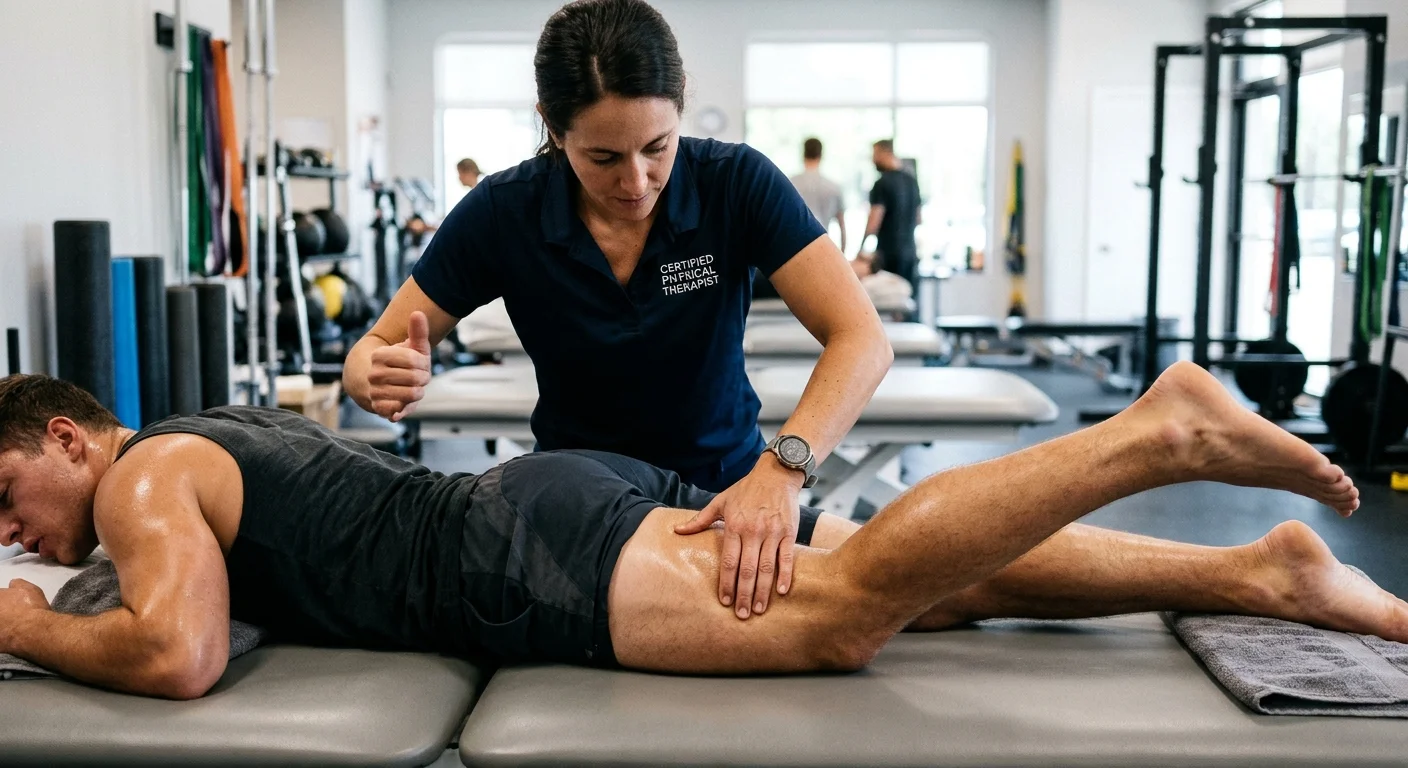
Active Release Therapy effectively resolves a broad array of acute and chronic musculoskeletal injuries across all performance levels. Because athletic movements place repetitive stresses on specific body regions, soft tissue adhesions routinely accumulate in high-strain transition zones where muscles convert into tendons. Clinical data from the American College of Sports Medicine confirms that targeted manual soft tissue therapies reduce injury recurrence rates in endurance and power athletes alike.
Here are several primary conditions that benefit directly from active release therapy protocols:
- Plantar Fasciitis: ART releases dense scar tissue in the plantar fascia and deep calf muscles (gastrocnemius and soleus), taking tension off the heel attachment point.
- Tennis and Golfer’s Elbow: Targeted treatment releases adhesions in the forearm flexors and extensors, eliminating painful traction at the medial and lateral epicondyles.
- Rotator Cuff Tendonitis and Shoulder Impingement: The provider restores normal sliding motion between the subscapularis, supraspinatus, and deltoid muscles, opening up the subacromial space.
- Sciatica and Piriformis Syndrome: ART frees the sciatic nerve where it becomes entrapped or compressed under a tight, hypertrophied piriformis muscle in the gluteal region.
- Iliotibial (IT) Band Syndrome: Direct tension released along the tensor fasciae latae and gluteus maximus decreases friction between the IT band and the lateral femoral condyle.
- Carpal Tunnel Syndrome: By releasing structural adhesions along the flexor tendons and median nerve pathway in the forearm and wrist, ART reduces hand numbness and tingling.
Each of these conditions shares a common underlying root: tissue entrapment and restricted gliding capacity. Removing mechanical friction allows localized inflammation to clear naturally, speeding up tissue healing without relying on long-term anti-inflammatory medications.
Is Active Release Technique Right for You?
Active Release Technique is an excellent choice for individuals experiencing persistent soft tissue tightness, dull aching pain, decreased flexibility, or nerve sensations like tingling and weakness. Whether you are a marathon runner, a recreational weightlifter, or a desk worker suffering from chronic posture-related neck stiffness, ART addresses the underlying scar tissue driving your discomfort. Because the treatment adapts to your personal tolerance, certified providers tailor movement speed and manual tension to suit your comfort level.
While ART is exceptionally safe and non-invasive, certain medical conditions require caution or alternative therapies. ART should not be performed directly over acute bone fractures, open skin wounds, severe deep vein thrombosis (DVT), or active soft tissue infections. During your initial evaluation, a qualified practitioner reviews your full health history to confirm that soft tissue manipulation aligns safely with your overall recovery goals.
FAQ
What is active release therapy used for?
Active Release Therapy is used to treat soft tissue conditions involving muscles, tendons, ligaments, fascia, and nerves. It breaks down dense scar tissue adhesions caused by overuse, repetitive strain, micro-trauma, or acute sports injuries to restore natural movement and relieve chronic pain.
How long does an active release technique session take?
A typical ART treatment session lasts between 15 and 30 minutes. It is frequently performed alongside chiropractic adjustments or physical therapy exercises, making it an efficient hands-on component of a comprehensive rehabilitation appointment.
Is active release technique painful?
ART can create a sensation of deep pressure or temporary discomfort, often described by patients as a productive “good hurt.” Because the provider works directly on restricted, inflamed tissue, light tenderness may occur during treatment but subsides quickly afterward.
Can a chiropractor perform active release therapy?
Yes, licensed chiropractors who undergo specialized postgraduate credentialing can perform ART. Chiropractors frequently integrate ART soft tissue protocols with spinal and joint adjustments to address both muscular tight spots and structural joint misalignments simultaneously.
How many active release therapy sessions do I need for a sports injury?
Most acute soft tissue injuries show significant functional improvement within three to six sessions. Chronic, complex overuse conditions may require six to ten visits combined with active corrective exercises for complete resolution.
Is active release technique covered by health insurance?
Insurance coverage varies depending on your individual plan and how the provider bills the service. When performed by a licensed chiropractor or physical therapist, ART is often covered under standard physical medicine or manual therapy benefit codes.