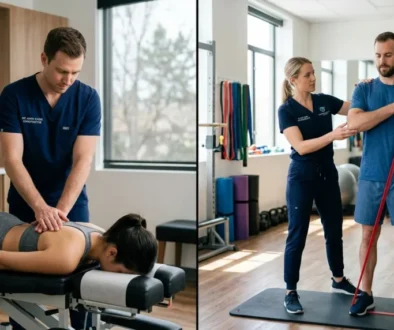

Can a Chiropractor Help with Shoulder Pain
For most mechanical shoulder issues—including rotator cuff strains, shoulder impingement, and posture-induced stiffness—choose chiropractic care combined with targeted physical rehabilitation. For structural emergencies like complete tendon tears or fractured bones, seek orthopedic surgery instead. An experienced chiropractor addresses the root cause of shoulder pain by correcting misalignments in both the glenohumeral joint and the cervical-thoracic spine. This dual approach relieves pressure on local nerves, restores the proper biomechanics of your upper body, and accelerates natural tissue healing without the need for invasive surgeries or dependency on prescription pain medications.
Key Takeaways for Managing Shoulder Pain
- Root Cause Focus: Chiropractors do not just treat symptoms; they realign the spine and shoulder joints to address the mechanical origins of your pain.
- Spine-Shoulder Connection: Many shoulder issues actually stem from compressed nerve roots in the lower neck (cervical spine).
- Multimodal Care: Successful treatment plans typically combine manual adjustments, soft tissue mobilization, and progressive rehabilitation exercises.
- Non-Invasive Choice: Chiropractic care offers a highly effective, drug-free alternative to corticosteroid injections and orthopedic surgeries.
What Does a Chiropractor Do for Shoulder Pain?

Chiropractors treat shoulder pain by restoring proper alignment and motion to the entire shoulder girdle, which includes the collarbone, shoulder blade, and upper arm bone. Your shoulder is the most mobile joint in your body, relying on a complex network of muscles, ligaments, and tendons to remain stable. When any of these structures undergo micro-trauma or misalignment, the entire mechanics of your upper body break down. A chiropractor evaluates the joint to determine where movement is restricted and applies precise manual adjustments to restore proper motion.
In addition to adjusting the shoulder joint itself, a chiropractor evaluates your neck and upper back. The nerves that control your shoulder muscles originate in your cervical spine. If these spinal segments are misaligned, they can irritate nerves and cause radiating pain, weakness, or muscle spasms in your shoulder. Practitioners use targeted spinal adjustments to relieve this nerve pressure, allowing the surrounding musculature to relax and heal.
Beyond skeletal adjustments, chiropractors utilize specialized soft tissue techniques. These methods help break up painful scar tissue, reduce chronic inflammation, and increase local blood flow. By combining joint manipulation with soft tissue therapies, chiropractors restore the sliding mechanics of your muscles and tendons. This comprehensive approach ensures that you recover your full range of motion while minimizing the risk of re-injury.
Why a Chiropractor Can Help with Shoulder Pain and Dysfunction
Chiropractors can help resolve shoulder pain because they focus on restoring the normal kinetic relationship between your spine and your extremities. According to a clinical study published by the National Center for Biotechnology Information (NCBI), shoulder pain is the third most common musculoskeletal complaint, with a lifetime prevalence of up to 67%. Many of these cases are mechanical in nature, making them highly responsive to conservative manual therapies.
As a clinical recommendation, patients must avoid the common mistake of treating shoulder pain as an isolated joint issue. Many chronic shoulder issues are actually referred pain patterns caused by subluxations in the C5 through C7 vertebrae of the cervical spine. If a doctor only treats your rotator cuff without assessing your neck, your pain will likely return. An experienced practitioner will evaluate your cervical spine to ensure your nerves can communicate clearly with your shoulder muscles.
Adjusting the thoracic spine (upper back) is also critical for shoulder recovery. If your upper back is stiff and rounded forward, your shoulder blade cannot glide properly along your rib cage. This poor posture restricts your ability to raise your arm overhead, leading to repetitive pinching of your rotator cuff tendons. Correcting your spinal alignment allows your shoulder blades to move dynamically, taking the mechanical stress off your vulnerable shoulder joints.
Common Shoulder Conditions Treated by Chiropractic Care
Chiropractors successfully treat a wide range of shoulder conditions by targeting the underlying structural issues rather than just masking the symptoms. If you are looking for a qualified expert chiropractor near you to evaluate your shoulder, starting with a comprehensive musculoskeletal assessment is key. Here are the most common conditions that benefit from chiropractic intervention:
- Shoulder Impingement Syndrome: This occurs when the top outer edge of your shoulder blade rubs against or pinches your rotator cuff tendons. Chiropractic adjustments open up this joint space, reducing friction and inflammation.
- Rotator Cuff Tendonitis and Strains: Repetitive overhead activities can strain the four major muscles that stabilize your shoulder. Chiropractors utilize precise soft tissue therapies to speed up tendon healing.
- Adhesive Capsulitis (Frozen Shoulder): This painful condition causes severe stiffness and limits all shoulder movement. Chiropractors use gentle, progressive joint mobilization techniques to break up the stiffened joint capsule.
- Cervical Radiculopathy: A pinched nerve in your neck can send shooting pains, numbness, and tingling down into your shoulder. Spinal adjustments quickly take the pressure off these sensitive nerve pathways.
- Osteoarthritis: Wear and tear of the shoulder cartilage leads to painful bone-on-bone friction. While chiropractic cannot rebuild lost cartilage, it maximizes the joint space and improves remaining mobility.
Active clinical management is crucial for these conditions. A study published in the Journal of Manipulative and Physiological Therapeutics (JMPT) found that chiropractic manipulative therapy combined with rehabilitative exercise resulted in a 75% improvement in shoulder range of motion and pain reduction for patients suffering from subacromial impingement. Early intervention prevents these soft tissue imbalances from degenerating into chronic, arthritic changes.
Chiropractic Shoulder Care vs. Traditional Medical Interventions
Traditional medical treatments for shoulder pain often rely on managing symptoms rather than correcting structural dysfunction. Common medical protocols include prescribing non-steroidal anti-inflammatory drugs (NSAIDs) or administering corticosteroid injections directly into the joint. While these methods can temporarily reduce pain, they do not correct the underlying joint misalignment or muscle imbalances. Over time, repeated steroid injections can actually weaken your shoulder tendons, making them more susceptible to tearing.
In contrast, chiropractic care offers a natural, non-invasive alternative that addresses the root mechanical problems. Chiropractors focus on restoring correct movement patterns, eliminating muscle tightness, and optimizing nervous system function. By addressing the actual cause of your discomfort, chiropractic care provides lasting relief and reduces your reliance on pharmaceutical medications. This conservative path is also significantly safer and requires zero post-procedure downtime.
If you are exploring different therapeutic options, it helps to understand how these treatments compare in terms of their goals, risks, and recovery times. The table below outlines the primary differences between chiropractic care and conventional medical interventions:
| Treatment Method | Primary Clinical Benefit | Potential Risks or Downsides | Average Recovery Time |
|---|---|---|---|
| Chiropractic Care | Restores joint alignment, improves nerve function, and heals soft tissues naturally. | Mild soreness for 24 to 48 hours after your session. | Immediate return to daily activities; gradual improvement over 4 to 8 weeks. |
| Cortisone Injections | Provides rapid, temporary reduction of local pain and inflammation. | Can degrade local tendon integrity and mask worsening structural damage. | Requires 2 to 3 days of rest; pain relief typically lasts only 1 to 3 months. |
| Physical Therapy | Strengthens weak stabilizing muscles and improves movement patterns. | Requires a significant time commitment and active patient participation. | Progressive improvement over 6 to 12 weeks of consistent training. |
| Orthopedic Surgery | Repairs torn ligaments, removes bone spurs, or replaces degenerated joints. | Infection risks, surgical scarring, permanent stiffness, and high overall costs. | Requires 3 to 6 months of intense rehabilitation and restricted movement. |
What to Expect During Your Initial Chiropractic Shoulder Examination

Your first visit to a chiropractor for shoulder pain will involve a comprehensive physical examination to pinpoint the precise source of your discomfort. Chiropractors do not perform adjustments blindly. They use a structured diagnostic process to rule out serious medical red flags and confirm that your shoulder pain is safe to treat with manual therapies. Understanding what to expect can help you feel relaxed and prepared for your appointment.
Your diagnostic evaluation will generally follow these progressive steps:
- Detailed Patient Consultation: Your chiropractor will discuss your medical history, when your shoulder pain began, and what movements make it worse.
- Posture and Kinetic Chain Analysis: The doctor will examine your standing posture, looking for uneven shoulders, a forward head position, or restricted movement in your upper back.
- Range of Motion Testing: You will perform simple movements to show how far you can raise, rotate, and bend your arms.
- Orthopedic and Neurological Exams: The doctor will perform specific physical tests to check your rotator cuff strength and check for signs of pinched nerves originating from your neck.
- Spinal and Extremity Palpation: Your chiropractor will gently feel the joints in your neck, back, and shoulders to identify areas of inflammation, muscle tension, and joint restriction.
- Customized Treatment Plan: If your shoulder pain is mechanical, the doctor will explain their findings and design a tailored plan using specialized chiropractic techniques suited for your recovery.
During this initial visit, your chiropractor will also determine if you need referral to another specialist. If they suspect a complete tendon rupture, a bone fracture, or systemic joint disease, they will refer you for advanced imaging like an MRI or ultrasound. This rigorous screening process ensures you always receive the safest and most appropriate care for your specific injury.
Therapies and Techniques Used to Relieve Shoulder Pain

Chiropractors utilize a variety of manual therapies to restore pain-free movement to your shoulder. One of the most effective methods is joint mobilization. During this therapy, the chiropractor applies gentle, controlled pressure to the stiff shoulder joint in the direction of its restriction. This helps stretch the tight joint capsule, lubricates the joint with natural synovial fluid, and reduces localized stiffness caused by arthritis or frozen shoulder.
To address the muscular component of your injury, chiropractors often use myofascial release, trigger point therapy, or instrument-assisted soft tissue mobilization. These techniques are helpful for breaking down scar tissue, and understanding what manual therapy entails helps patients realize that muscles and joints must be treated together. Releasing chronically tight muscles like the pectorals and subscapularis allows your shoulder joint to sit back in its optimal, neutral position.
Finally, your treatment plan will include customized rehabilitation exercises. Your chiropractor will teach you movements designed to strengthen your lower trapezius, serratus anterior, and rotator cuff muscles. Strengthening these stabilizing muscles ensures your shoulder stays in alignment long after you leave the clinic, giving you a sustainable solution to chronic pain.
Average Costs and Treatment Timelines for Shoulder Recovery
The cost of chiropractic care for shoulder pain depends on the severity of your injury and your health insurance coverage. An initial comprehensive examination, which includes diagnostic testing and a review of your medical history, typically ranges from $100 to $250. Standard follow-up adjustment and therapy sessions generally cost between $60 and $150 per visit. Many health insurance plans cover chiropractic care, which can significantly lower your out-of-pocket expenses.
Your recovery timeline depends on how long you have had the pain and the extent of your tissue damage. Acute injuries, such as a mild muscle strain from a recent workout, often resolve within 4 to 6 sessions over a couple of weeks. Chronic conditions like long-standing shoulder impingement or frozen shoulder require more consistent care, typically taking 8 to 12 weeks of progressive adjustments and rehabilitation to achieve full stability.
Choosing conservative care first can also save you a significant amount of money over time. A retrospective study on musculoskeletal pain management published by the Journal of Managed Care & Specialty Pharmacy indicated that initiating care with a chiropractor reduced overall specialty care costs by up to 40% compared to starting with traditional orthopedic tracks, which frequently involve expensive MRIs, steroid injections, and surgeries.
FAQ
What does a chiropractor do for shoulder pain?
A chiropractor evaluates the entire shoulder girdle, upper back, and neck to find the root cause of your pain. They use precise joint adjustments, gentle mobilization, soft tissue therapy, and corrective exercises to restore proper alignment and reduce nerve irritation.
How many chiropractic sessions will I need for shoulder pain?
The number of sessions depends on whether your injury is acute or chronic. Mild muscle strains may improve in 4 to 6 visits, while chronic conditions like frozen shoulder or severe impingement can require 8 to 12 weeks of structured care to fully heal.
Can a pinched nerve in my neck cause pain in my shoulder?
Yes, compressed nerve roots in your lower neck (specifically C5 through C7) frequently cause radiating pain, numbness, and muscle weakness in your shoulder. Chiropractors use spinal adjustments to relieve this nerve pressure and eliminate the radiating pain.
Is chiropractic care safe for a rotator cuff injury?
Chiropractic care is very safe and effective for partial rotator cuff tears, tendonitis, and strains. However, if you have a complete, full-thickness tear of the tendon, you will require an orthopedic evaluation to determine if surgical repair is necessary.
Can a chiropractor help with a frozen shoulder?
Yes, chiropractors use specialized joint mobilization and myofascial release techniques to gently stretch the tight joint capsule of a frozen shoulder. This gradual therapy helps restore your range of motion and relieves chronic stiffness over time.
How do I know if my shoulder pain is skeletal or muscular?
Skeletal pain often feels like a deep, sharp ache inside the joint during specific movements, while muscular pain feels like a dull, throbbing ache that is tender when pressed. Chiropractors are trained to test both structures to determine the exact cause of your pain.