

What Injuries Can a Chiropractor Treat After a Car Accident?
For motor vehicle collision injuries—especially whiplash, lumbar strains, and joint misalignment—immediate auto accident chiropractic treatment is your best strategy to prevent permanent scar tissue and chronic stiffness. Emergency room physicians excel at ruling out life-threatening trauma and bone fractures, but standard medical care often relies on pain medications that merely mask structural damage. Visiting a specialized car accident chiropractor within 72 hours corrects subtle spinal subluxations, decreases localized inflammatory markers, and restores biomechanical alignment. Combining gentle manual therapy, targeted mobilization, and spinal adjustments delivers an optimal recovery path that resolves root-cause neuromuscular trauma rather than delaying it. Delayed care often leads to permanent joint dysfunction, premature disc degeneration, and loss of range of motion. Here is how modern accident recovery chiropractic treatment safely restores your mobility, alleviates underlying pain, and safeguards your long-term spinal health.
Key Takeaways

- Auto accident chiropractic treatment targets structural misalignments rather than masking soft tissue pain with prescription drugs.
- Seeking care from a dedicated car accident chiropractor within 72 hours reduces scar tissue formation and prevents long-term disability.
- Comprehensive collision care combines spinal adjustments, soft tissue release, and progressive rehabilitation exercises for optimal healing.
- Proper clinical documentation created during accident recovery chiropractic treatment provides vital medical evidence for insurance claims.
- Integrative protocols utilizing chiropractic care, physical therapy, and acupuncture deliver faster functional recovery and reduced pain.
Common Motor Vehicle Injuries Resolved by a Car Accident Chiropractor

A skilled car accident chiropractor treats a wide array of spinal, articular, and soft tissue injuries caused by sudden vehicular impact forces. During a collision, your body experiences rapid acceleration and deceleration. This kinetic energy transfers directly into your musculoskeletal system, causing micro-tears in ligaments and displacement of spinal joints.
Whiplash, clinically known as cervical acceleration-deceleration (CAD), stands as the most frequent injury following rear-end collisions. When your head jerks backward and forward uncontrollably, the cervical spine undergoes severe hyper-extension and hyper-flexion. This movement stretches delicate neck muscles, strains ligaments, and displaces cervical vertebrae from their natural curvature.
Beyond cervical trauma, motor vehicle accidents routinely cause lumbar disc herniations, thoracic spine subluxations, and intercostal muscle strains. Seatbelt restraints absorb massive forces across your chest and pelvis. While seatbelts save lives, the asymmetric pressure often rotates the thoracic vertebrae and torques the sacroiliac joints. This mechanical shift creates deep back pain, pelvic dysfunction, and radiating nerve irritation.
According to epidemiological research compiled by the Spine Research Institute of San Diego, over 3 million Americans suffer whiplash injuries each year, with nearly 50% experiencing chronic symptoms when relying solely on passive, medication-focused medical care. Targeted chiropractic intervention addresses these underlying mechanical failures directly.
- Cervical Strain and Sprain: Tears in neck tendons and ligaments leading to severe stiffness and reduced range of motion.
- Herniated or Bulging Discs: Displaced spinal discs that press against spinal nerves, causing sharp pain or numbness.
- Facet Joint Syndrome: Inflammation of the small joints connecting your vertebrae, restricting rotational movement.
- Sciatica and Radiculopathy: Compression of nerve roots radiating burning pain down the lower back, glutes, and legs.
- Post-Traumatic Headaches: Tension and cervicogenic headaches originating from upper neck muscle spasms and cervical alignment shifts.
How Accident Recovery Chiropractic Treatment Works in the Body
Accident recovery chiropractic treatment restores normal spinal mechanics by correcting joint subluxations, decreasing neurological compression, and promoting optimal tissue remodeling. When spinal segments shift out of proper alignment due to collision impact, neighboring soft tissues swell and enter a protective state of muscle spasm. This localized swelling restricts localized blood flow and traps inflammatory chemicals near sensitive spinal nerve roots.
Chiropractic adjustments deliver precise, gentle forces to restricted spinal joints. These controlled thrusts restore normal movement to fixated joint capsules, which stimulates mechanical receptors within the joint. This neurophysiological stimulation signals your central nervous system to shut down hyperactive muscle spasms, instantly decreasing localized pressure.
Furthermore, manual joint manipulation improves vascular fluid exchange within the intervertebral spaces. Fluid movement brings fresh oxygen and repair nutrients directly to damaged cartilage, tendons, and disc structures. If you experience radiating nerve discomfort down your arm or leg following a collision, undergoing specialized chiropractic treatment for a pinched nerve relieves physical impingement and lowers systemic neural inflammation.
Without mechanical restoration, injured ligaments heal with dense, disorganised scar tissue. Collagen fibers laid down in a haphazard pattern create permanently stiff, brittle tissue prone to re-injury. Chiropractic mobilization aligns repairing collagen fibers along natural lines of mechanical stress, ensuring your restored ligaments remain flexible and resilient long after your collision case closes.
Comparing Car Accident Recovery Methods: Chiropractic vs. Standard Options
Comparing collision recovery methods reveals that chiropractic care directly addresses mechanical joint damage, whereas traditional medical interventions primarily manage acute symptom perception. Relying exclusively on rest and pain relievers often leaves underlying joint dysfunctions uncorrected, setting the stage for premature joint degeneration years later.
Standard emergency room procedures evaluate life-threatening conditions using CT scans and X-rays. Once bone fractures and internal hemorrhages are ruled out, ER doctors routinely discharge collision victims with prescriptions for muscle relaxants and non-steroidal anti-inflammatory drugs (NSAIDs). While pharmaceuticals reduce acute discomfort, they do not repair torn ligament fibers, realign displaced vertebrae, or re-establish balanced spinal curves.
| Treatment Method | Primary Focus | Addresses Mechanical Root Cause | Long-Term Functional Recovery | Typical Out-of-Pocket Cost Range |
|---|---|---|---|---|
| Chiropractic & Manual Care | Joint realignment, soft tissue remodeling, biomechanics | Yes – Directly realigns joints and releases restricted fascia | High – Restores natural joint motion and spinal posture | $65 – $150 per session ($1,200 – $4,500 total protocol) |
| Medication & Bed Rest | Symptom suppression and chemical pain blocking | No – Masks pain signals while structural dynamic remains altered | Low – Risk of chronic scar tissue formation and re-injury | $100 – $500 (Pharmacy & general consultation fees) |
| Physical Therapy Alone | Muscular strengthening and active movement patterns | Partially – Strengthens muscles but lacks high-velocity joint release | Moderate to High – Improves active stability and endurance | $75 – $200 per session ($1,500 – $5,000 total protocol) |
| Surgical Intervention | Structural stabilization for severe disc or bone damage | Yes – Reserved for severe anatomical instability or severe damage | Variable – Involves substantial recovery timelines and risks | $15,000 – $75,000+ (Requires extensive insurance pre-approval) |
Combining structural chiropractic adjustments with targeted dynamic physical exercise yields the highest long-term recovery metrics. While medications help patients manage unbearable pain during the initial 48 hours, active mechanical rehabilitation remains essential for regaining true physical independence and structural alignment.
The 72-Hour Rule: Why Immediate Auto Accident Chiropractic Treatment Matters
Seeking auto accident chiropractic treatment within the first 72 hours stops the cycle of chronic inflammation and prevents disorganised collagen deposition inside injured ligaments. In the immediate aftermath of a crash, your body floods damaged soft tissues with inflammatory cytokines. This biological response serves to protect injured structures, but uncontrolled swelling quickly destroys healthy surrounding micro-vasculature.
Early clinical evaluation allows your provider to identify subtle joint restriction and tissue swelling before deep scar tissue consolidates. During the initial three days, damaged collagen fibers remain malleable. Gentle mobilization techniques during this early window guide repairing tissues to form organized, parallel structural chains rather than dense, restricted adhesions.
A clinical study published by the Journal of Orthopaedic & Sports Physical Therapy demonstrated that patients receiving early physical mobilization within 96 hours of soft tissue trauma experienced a 38% greater reduction in persistent disability compared to patients instructed to rest and delay physical therapy. Timely mechanical intervention actively prevents post-traumatic joint stiffness.
From an insurance perspective, seeking treatment within 72 hours creates an unbroken medical record connecting your injuries directly to the motor vehicle collision. Auto insurance adjusters closely evaluate the timeframe between your crash and your first documented clinical assessment. Delaying medical care by weeks allows insurance companies to argue that your spinal pain resulted from unrelated activities rather than the vehicular impact.
Most auto accident rehabilitation programs fall between $1,200 and $4,500 depending on injury severity and overall care duration. In most motor vehicle collision cases, these clinical costs are covered completely through Personal Injury Protection (PIP), Medical Payments (MedPay) coverage, or the fault driver’s auto liability insurance policy.
Step-by-Step Chiropractic Rehabilitation Protocol After a Collision
A structured post-collision chiropractic protocol systematically guides soft tissues from acute pain relief to total mechanical stabilization. Every patient requires a personalized clinical path, but comprehensive injury recovery generally follows four distinct functional phases.
- Phase 1: Acute Pain & Edema Control (Weeks 1–2)
The primary objective during Phase 1 centers on calming nervous system hypersensitivity and reducing tissue swelling. Your clinician uses gentle low-force techniques, targeted soft tissue therapies, cold laser, and light joint mobilization. High-velocity manual thrusts are avoided during hyper-acute inflammation to protect delicate micro-vascular structures. - Phase 2: Structural Realignment & Soft Tissue Release (Weeks 3–6)
As initial swelling subsides, treatment shifts toward restoring natural joint range of motion and alignment. Your chiropractor performs specific spinal adjustments to unlock fixated vertebrae and restore cervical curvature. Myofascial release and instrument-assisted soft tissue mobilization break up developing scar tissue along damaged muscles. - Phase 3: Active Rehabilitation & Dynamic Strengthening (Weeks 6–12)
Restoring joint alignment must be paired with muscular stabilization. Phase 3 introduces functional strengthening, core stabilization exercises, and proprioceptive re-training. Active physical therapy strengthens deep spinal flexor and extensor muscles, enabling your skeletal frame to maintain proper posture during daily tasks. - Phase 4: Ergonomic Stabilization & Long-Term Wellness (Month 3+)
The final phase solidifies functional gains and prevents recurring pain episodes. Your provider assesses your daily workstation ergonomics, driving posture, and biomechanics during movement. Maintenance visits are spaced out periodically to monitor joint health and prevent minor fixations from escalating into severe pain.
A common professional mistake in auto trauma management is applying aggressive high-velocity thrust adjustments during the hyper-acute inflammatory phase (first 48 to 72 hours). Experienced clinicians utilize gentle low-force techniques—such as activator methods, flexion-distraction, or soft tissue release—before introducing firmer manual thrusts once localized inflammation calms down.
Integrating Complementary Therapies for Comprehensive Car Accident Recovery
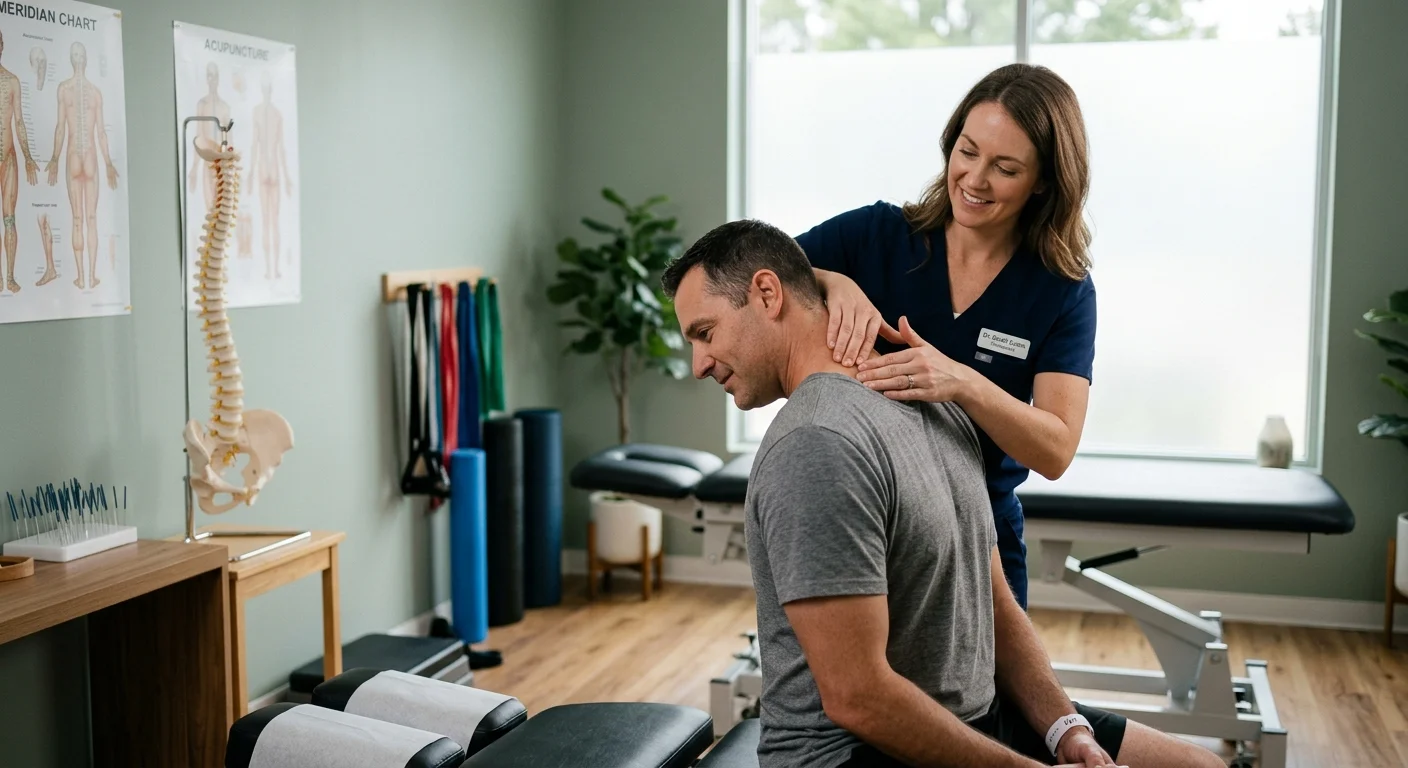
Integrating physical therapy, massage, and acupuncture with spinal adjustments accelerates soft tissue repair and optimizes clinical outcomes after a motor vehicle collision. Multi-modal rehabilitation treats every layer of the musculoskeletal system, ensuring joints, fascia, muscles, and peripheral nerves heal simultaneously.
Working directly with an experienced car accident chiropractor ensures your diagnostic workup and multi-disciplinary treatment plan are fully coordinated. Combining spinal adjustments with targeted myofascial massage releases chronic protective muscle splinting, allowing adjusted joints to remain in their optimal positions much longer between clinical visits.
Acupuncture offers tremendous clinical value for accident recovery by modulating pain signals along peripheral sensory nerves and stimulating endorphin release. Electro-acupuncture relaxes deep muscle spasms around damaged spinal segments that manual palpation cannot easily reach. Additionally, therapeutic clinical nutrition supports internal tissue repair by lowering systemic inflammation through targeted omega-3 fatty acids, proteolytic enzymes, and bioavailable magnesium supplements.
Understanding how long chiropractic care takes to work helps patients maintain consistent compliance throughout their full recovery roadmap. Soft tissue remodeling requires time; while pain relief often occurs within the first few visits, structural ligament stabilization typically takes 8 to 12 weeks of continuous care.
A landmark outcome study published in the Archives of Physical Medicine and Rehabilitation revealed that combining spinal manual therapy with active therapeutic exercise reduced return-to-work timelines by 32% compared to passive modalities applied in isolation. Coordinated, multi-faceted care remains the gold standard for full crash recovery.
Frequently Asked Questions
What should I expect during my first visit to a car accident chiropractor?
Your initial visit begins with a thorough health history intake and detailed discussion regarding the mechanics of your vehicle collision. Your chiropractor performs orthopedic tests, neurological examinations, spinal palpation, and postural evaluations. If clinically indicated, diagnostic X-rays are taken to evaluate spinal alignment and rule out hidden fractures before gentle treatment begins.
How soon after a collision should I schedule accident recovery chiropractic treatment?
You should schedule an evaluation within 24 to 72 hours following a crash, even if you feel no immediate pain. Adrenaline and acute trauma shock frequently mask soft tissue tears, whiplash, and inflammation for several days. Early evaluation stops inflammatory damage, prevents scar tissue buildup, and secures vital medical documentation for your auto insurance claim.
Is auto accident chiropractic treatment covered by personal injury protection or auto insurance?
Yes, chiropractic care for collision injuries is typically covered under Personal Injury Protection (PIP), Medical Payments (MedPay), or third-party auto liability insurance. Most specialized clinics bill auto insurance policies directly, meaning patients experience little to no out-of-pocket costs while receiving necessary rehabilitation.
Can a chiropractor evaluate hidden soft tissue injuries that do not show up on X-rays?
Yes, chiropractors specialize in assessing soft tissue trauma through detailed physical palpation, range-of-motion testing, and specialized orthopedic maneuvers. Standard X-rays only reveal dense bone structures and fractures, leaving ligament sprains, muscle tears, and disc herniations invisible. Chiropractors identify these hidden soft tissue injuries through targeted clinical exams and can order advanced MRI imaging when needed.
Which chiropractic techniques are safest for treating whiplash after a rear-end crash?
Low-force techniques such as cervical gentle mobilization, instrument-assisted adjustments (Activator), flexion-distraction table therapy, and soft tissue myofascial release are safest during acute whiplash recovery. These gentle methods restore joint motion without introducing harsh forces to inflamed, hyper-sensitive neck muscles and ligaments.
How long does a typical car accident chiropractic treatment plan last?
Mild soft tissue strains may require only 3 to 6 weeks of care, whereas moderate to severe injuries involving whiplash or disc herniations often necessitate 8 to 12 weeks of progressive treatment. Your chiropractor continuously re-evaluates your functional mobility and adjusts your visit frequency as your spinal structures stabilize.