
Acupuncture for Sports Injuries: Can It Help With Pain and Recovery?
For acute muscle strains, chronic tendonitis, or joint inflammation, integrating acupuncture into your rehabilitation protocol delivers significantly faster pain relief and tissue recovery than passive rest alone. Athletes suffering from acute soft tissue injuries should schedule targeted sessions within 24 to 48 hours of injury to suppress immediate inflammatory cascades, while those managing chronic overuse issues benefit from consistent weekly therapies. By combining precise micro-needle insertion with neuromuscular stimulation, acupuncture triggers localized vasodilation, increases ATP production, and prompts the central nervous system to release natural opioid peptides. When paired with active rehabilitation, acupuncture accelerates systemic recovery, clears cellular waste, and resets overactive muscle spindles. Typical session costs range between $75 and $150 per visit without insurance, making it an accessible, high-yield investment for recreational and competitive athletes alike.
Key Takeaways
- Accelerated Tissue Repair: Acupuncture increases blood microcirculation and triggers local cellular growth factors to speed up muscle and tendon repair.
- Natural Pain Control: Needling stimulates the nervous system to release endorphins, enkephalins, and adenosine, providing immediate drug-free pain relief.
- Neuromuscular Reset: Electro-acupuncture targets specific motor points to deactivate painful trigger points and restore suppressed muscle activation.
- Synergistic Recovery: Combining acupuncture with active chiropractic adjustments and physical therapy shortens total athletic downtime.
- Accessible Investment: Treatment sessions typically cost between $75 and $160, offering a low-risk, non-invasive alternative to prolonged anti-inflammatory drug use.
The Physiology of Acupuncture for Sports Injury Recovery
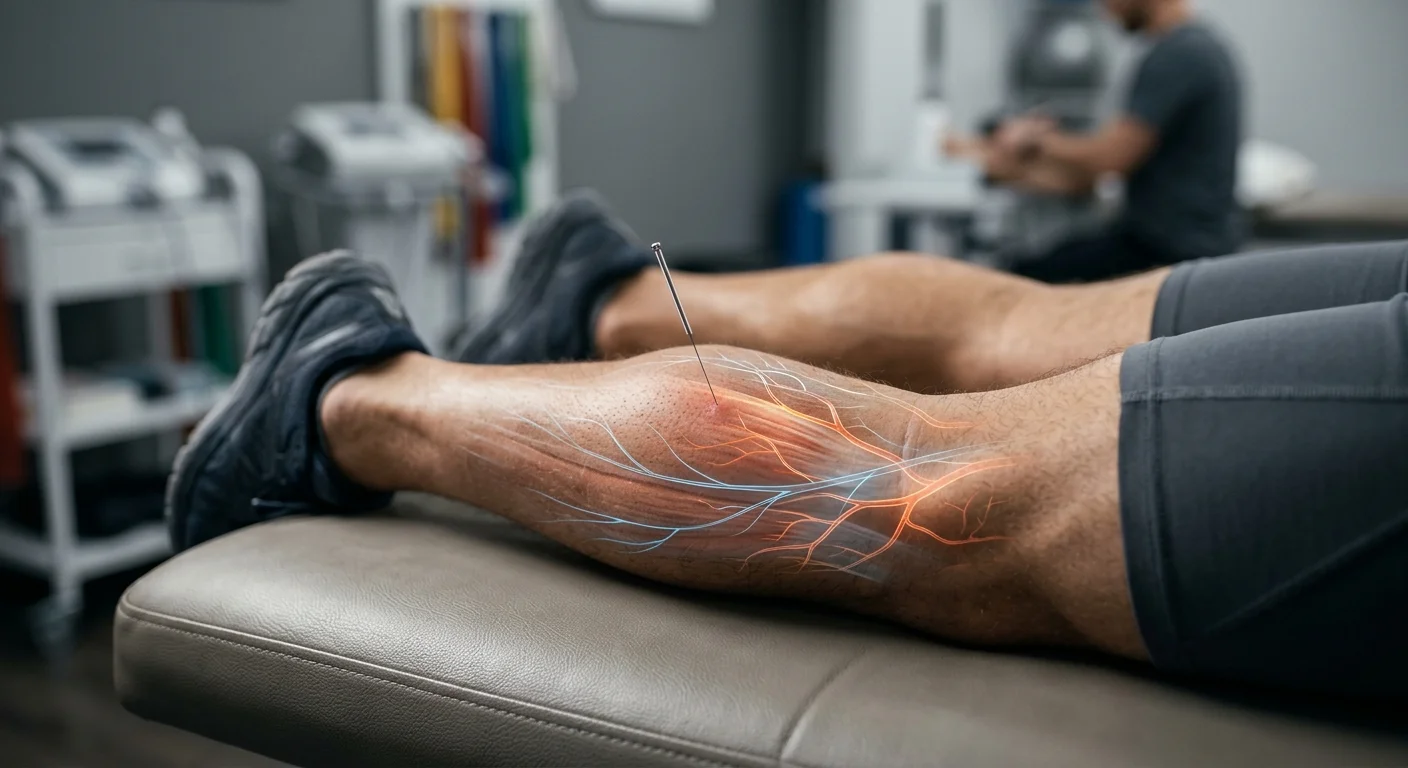
Acupuncture accelerates recovery by directly stimulating the body’s self-healing biological pathways. When a licensed practitioner inserts ultra-thin, sterile stainless steel needles into specific anatomical points, it activates A-delta and C sensory nerve fibers. This mechanical stimulus sends afferent signals through the spinal cord straight to the brainstem and central nervous system. In response, the brain releases powerful neurochemical compounds including beta-endorphins, dynorphins, and serotonin. These endogenous chemicals block pain signals at the spinal gate level, providing profound analgesia without the gastrointestinal or cardiovascular side effects associated with long-term nonsteroidal anti-inflammatory drug (NSAID) use.
Beyond central nervous system modulation, the localized micro-stimulation created by acupuncture needles elicits a controlled micro-inflammatory response. Surrounding capillaries dilate, sharply increasing blood circulation, oxygen saturation, and nutrient delivery to damaged tendons, ligaments, and muscle fibers. Clinical data highlighted by the National Center for Complementary and Integrative Health indicates that acupuncture down-regulates pro-inflammatory cytokines while elevating local concentrations of adenosine, a biological compound that acts as an effective natural painkiller and anti-inflammatory agent. This dual mechanism flushes out metabolic waste like lactic acid and metabolic byproducts while supplying raw amino acids for collagen synthesis.
Specialized sports acupuncture techniques, such as electro-acupuncture, pass a gentle electrical micro-current between targeted needles to depolarize hypertonic muscle fibers. This continuous electrical stimulation breaks up stubborn muscular adhesions, deactivates myofascial trigger points, and resets dysfunctional length-tension relationships across restricted joints. By re-establishing smooth sliding mechanics between deep fascial layers, athletes regain structural mobility and explosive force production much faster than through static stretching alone. Learning how acupuncture targets deep tissue stimulation gives athletes a clear understanding of why this modality produces measurable, immediate biomechanical improvements.
Common Sports Injuries That Respond Best to Acupuncture
Acupuncture effectively treats a broad spectrum of athletic conditions, spanning acute traumatic sprains to persistent chronic overuse syndromes. Because sports injuries typically involve a complex mix of muscle guarding, tendon inflammation, and peripheral nerve irritation, targeting both local tissue structures and broader kinetic pathways yields superior outcomes.
Tendonitis and chronic tendinopathies represent some of the most responsive conditions seen in clinical practice. Patellar tendonitis (jumper’s knee), Achilles tendinitis, hamstring tendinopathy, and lateral epicondylitis (tennis elbow) frequently resist passive resting protocols due to the poor baseline blood supply inherent to tendinous tissue. Inserting needles directly around the muscle-tendon junction stimulates neovascularization—the growth of new micro-blood vessels—which restores nutrient flow necessary to repair damaged collagen fibers. The World Health Organization officially recognizes acupuncture as a proven treatment for soft tissue strains, joint sprains, and neuromuscular conditions.
Acute muscle strains and ligament sprains also benefit from early acupuncture intervention. Soft tissue damage to the hamstrings, quadriceps, calves, or ankle ligaments triggers immediate protective muscle guarding. While useful immediately following trauma to stabilize the area, prolonged guarding creates localized ischemia that prolongs pain and restricts joint range of motion. Acupuncture deactivates hyperactive motor units, relieving protective spasms and allowing athletes to start active rehabilitation exercises earlier in their recovery timeline.
A common mistake less-experienced practitioners make during sports injury care is treating only the isolated site of pain while ignoring the broader kinetic chain. For example, treating a runner for persistent plantar fasciitis without addressing tight gastrocnemius muscles, inhibited gluteals, or pelvic imbalance often leads to early injury recurrence. An expert sports practitioner evaluates the athlete’s entire movement system, placing needles along key motor points up and down the kinetic chain to restore baseline muscle activation and alignment.
Acupuncture vs. Alternative Sports Recovery Techniques
Athletes evaluating injury recovery options often compare acupuncture with other popular therapies such as dry needling, physical therapy, and chiropractic care. While physical therapy focuses heavily on active strengthening and movement re-education, and standard dry needling targets localized muscle knots, sports acupuncture combines biological tissue healing with systemic nervous system regulation.
Electro-acupuncture offers distinct therapeutic benefits over simple dry needling by delivering continuous, controlled electrical frequencies (typically ranging from 2Hz to 100Hz) into deep neuromuscular junctions. Low frequencies (2Hz) stimulate the sustained release of beta-endorphins for long-lasting systemic pain relief, whereas higher frequencies (100Hz) promote rapid localized muscle relaxation and dynamic blood flow. To help you select the most effective treatment plan for your specific recovery goals, the table below breaks down key differences across popular sports recovery modalities.
| Therapeutic Modality | Primary Physiological Mechanism | Best Applied For | Typical Cost Range |
|---|---|---|---|
| Sports Acupuncture | Central nervous system modulation, endorphin release, microcirculation boost | Systemic recovery, chronic tendonitis, acute strains, stress reduction | $75 – $150 per session |
| Electro-Acupuncture | Continuous micro-current stimulation of neuromuscular motor points | Severe muscle spasms, recalcitrant tendinopathy, muscle inhibition | $90 – $160 per session |
| Dry Needling | Mechanical disruption of myofascial trigger points (local twitch response) | Focal muscle knots, localized fascial tightness | $50 – $120 per session |
| Physical Therapy & Rehab | Active progressive loading, movement re-education, joint mobilization | Post-surgical rehab, structural weakness, biomechanical retraining | $100 – $250 per session |
Step-by-Step Protocols for Integrating Acupuncture for Sports Injury Recovery
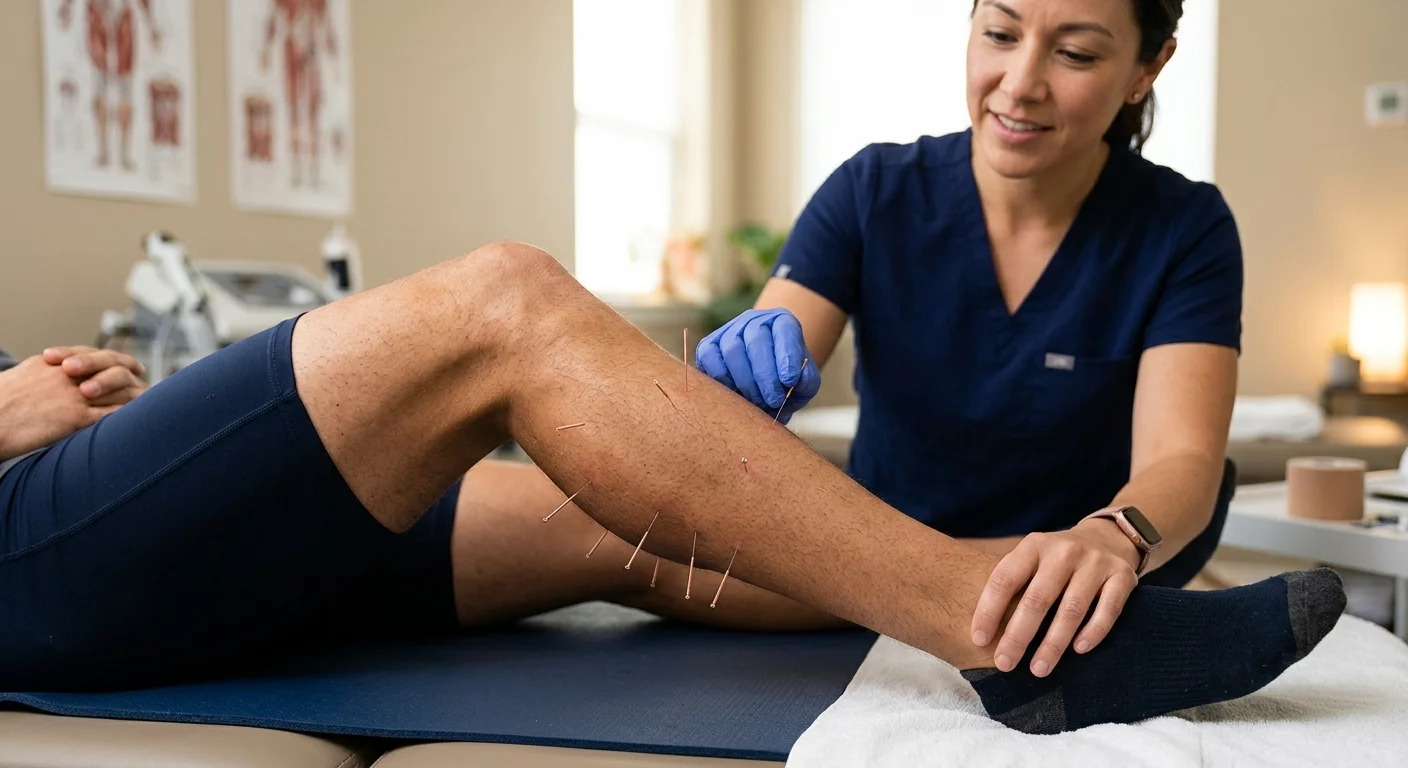
Successfully integrating acupuncture into your athletic training program requires a structured, multi-phase plan tailored to your specific recovery stage and athletic schedule. A comprehensive protocol transitions smoothly from acute symptom relief to long-term performance optimization.
- Initial Biomechanical & Orthopedic Evaluation: Your provider conducts functional movement screening, range-of-motion testing, manual muscle testing, and palpation to identify primary tissue damage alongside secondary kinetic chain compensations.
- Acute Phase Intervention (Days 1–7): During the immediate post-injury window, treatments focus on suppressing acute inflammation, reducing pain, and facilitating lymphatic drainage. Ultra-fine needles are placed peripherally around the injury site to soothe hyper-sensitive nerve endings without causing additional local trauma.
- Sub-Acute Tissue Remodeling & Electro-Stimulation (Weeks 2–4): As sharp pain subsides, needle placement shifts directly to tissue repair sites, tendon attachments, and inhibited motor points. Electro-acupuncture is introduced at targeted frequencies to align newly formed collagen fibers, break down scar tissue, and restore full muscle contractility.
- Functional Movement Re-Integration (Weeks 4–6): Pain-free movement is combined with active physical therapy drills. Practitioners often recommend integrating acupuncture with physical therapy and chiropractic care during the same phase to ensure joints stay properly aligned while stabilizing muscles rebuild strength.
- Maintenance and Performance Optimization (Ongoing): After full tissue healing, bi-weekly or monthly sessions manage training fatigue, prevent delayed onset muscle soreness (DOMS), and correct minor muscle imbalances before they escalate into structural injuries.
What to Expect During Your Sports Injury Acupuncture Session
If you are new to clinical needle therapies, knowing what to expect during a session helps ensure a comfortable and stress-free experience. Your appointment begins with a brief physical assessment where your practitioner evaluates your posture, gait, and joint range of motion.
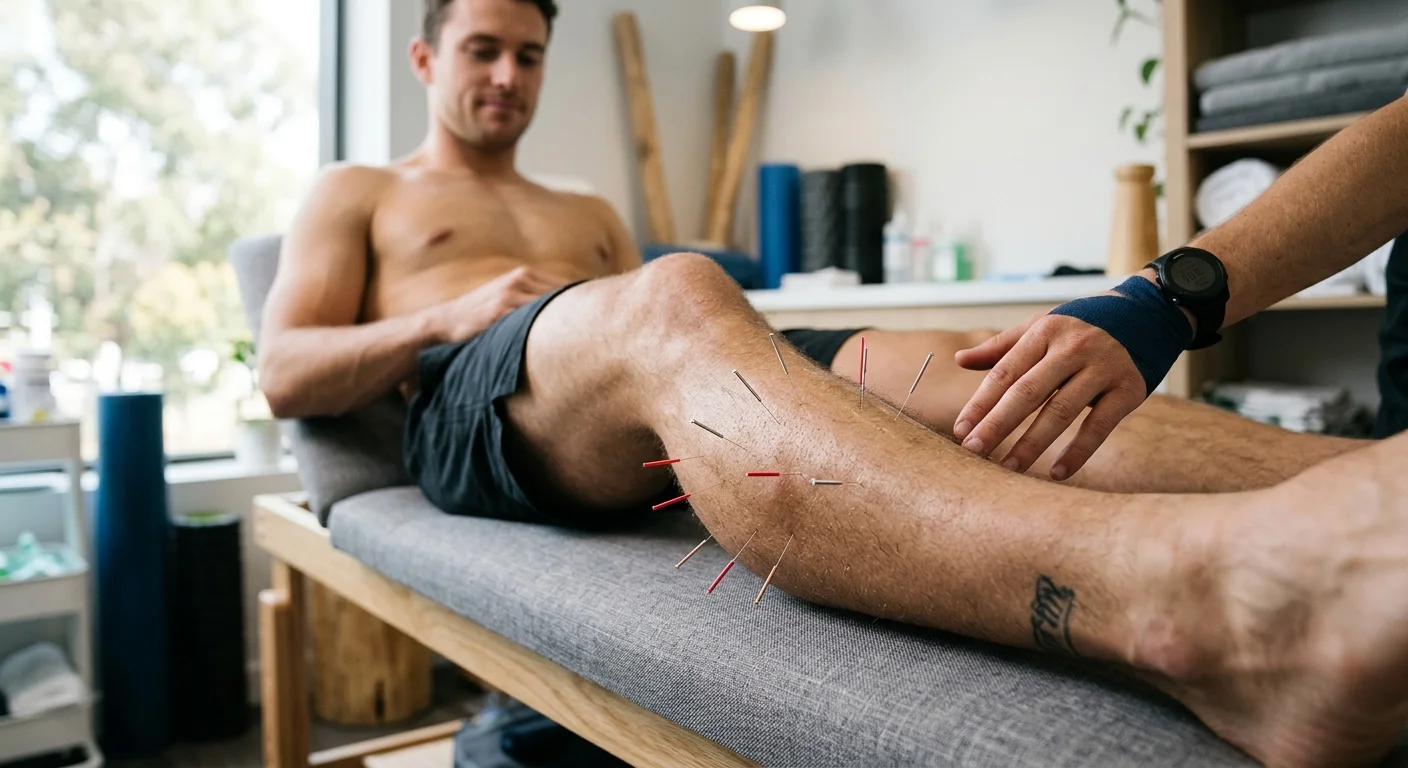
The needles used in sports acupuncture are single-use, sterile, solid-filament instruments about the thickness of a human hair—drastically different from hollow hypodermic needles used for routine blood draws. Upon insertion, you may feel a slight pinch followed by a distinct physiological response known as De Qi. Athletes describe this sensation as a mild ache, heavy pressure, subtle warmth, or a localized muscle twitch. This reaction indicates that the needle has successfully engaged local mechanoreceptors and muscular fascia.
During the 30-to-45-minute treatment rest period, needles remain inserted while you lie comfortably on a padded table in a quiet room. If electro-acupuncture is utilized, you will experience a light, rhythmic pulse or gentle tapping sensation that feels soothing rather than painful. Research published in the Journal of Athletic Training confirms that athletes who receive targeted acupuncture within 24 hours of strenuous physical exertion demonstrate up to a 40% reduction in delayed onset muscle soreness (DOMS) and regain baseline athletic performance up to two days faster than non-treated controls.
For acute sprains or strains, a targeted plan of 4 to 6 sessions over two to three weeks usually yields significant functional improvement. Chronic issues such as long-standing rotator cuff tendinopathy or stubborn hip impingement may require 8 to 12 sessions for complete tissue remodeling. Out-of-pocket costs for clinical sports acupuncture typically range between $75 and $160 per visit, with many sports clinics offering package rates for complete rehabilitation protocols. Booking specialized acupuncture therapy ensures your recovery plan is overseen by qualified clinical professionals dedicated to getting you back to peak performance.
FAQ
Does acupuncture for sports injuries hurt during treatment?
Most athletes feel minimal pain during needle insertion. Because sports acupuncture needles are extremely thin, you will typically feel only a small pinch followed by a dull ache or warm sensation, which signals that your body’s neurological healing pathways have been activated.
How quickly can an athlete return to play after acupuncture?
Return-to-play timelines depend on the severity of the injury, but acupuncture frequently accelerates the process. By reducing acute swelling, relieving muscle spasms, and dampening pain within 24 to 48 hours, athletes can start active rehab exercises sooner and return to sport days faster than with rest alone.
What is the difference between dry needling and sports acupuncture?
Dry needling focuses primarily on deactivating localized myofascial trigger points in tight muscle tissue. Sports acupuncture incorporates trigger point therapy alongside peripheral nerve stimulation, systemic inflammation control, connective tissue remodeling, and nervous system regulation for more comprehensive healing.
How many acupuncture sessions are needed for sports injury recovery?
Acute injuries like minor muscle pulls or mild joint sprains typically resolve within 4 to 6 sessions scheduled over two to three weeks. Chronic conditions, including long-standing tendonitis or deep muscle inhibition, generally require 8 to 12 sessions for long-term functional recovery.
Can you combine acupuncture with physical therapy and chiropractic care?
Yes, combining acupuncture with chiropractic care and physical therapy delivers excellent synergistic results. Acupuncture releases muscle guarding and calms irritated nerves, making chiropractic joint adjustments smoother and physical therapy exercises significantly more comfortable and effective.
Is acupuncture safe for acute muscle tears?
Acupuncture is safe for acute muscle tears when administered by a licensed clinician. During the initial acute phase, needles are positioned peripherally around the tear to control pain and fluid retention without disturbing fragile, newly forming micro-clots at the tear site.