
What Does a Chiropractor Do for Lower Back Pain
For sudden or lingering lower back discomfort, a chiropractor restores joint mobility. They relieve nerve pressure and relax tight muscles using targeted spinal adjustments, manual decompression, and soft-tissue therapy. Your pain may stem from joint restriction, poor posture, muscle strains, or herniated discs. In these cases, consulting a specialized chiropractor for lower back pain is your most effective, non-invasive first option. It helps you avoid surgery and prescription medication.
However, you must seek emergency medical intervention immediately if you experience progressive neurological deficits. These include sudden foot drop or loss of bowel and bladder control. For the vast majority of mechanical issues, a conservative approach yields the fastest recovery. This approach combines chiropractic spinal manipulation with active physical rehabilitation. By addressing the root biomechanical issues rather than simply masking symptoms, chiropractic care helps your body self-correct and prevents future flare-ups.
Key Takeaways
- Root-Cause Resolution: Chiropractors focus on restoring joint mechanics and spinal alignment rather than temporarily masking pain with medications.
- Multimodal Techniques: Treatment combines high-velocity low-amplitude adjustments, gentle mobilization, myofascial release, and decompression.
- Evidence-Backed Safety: Research confirms chiropractic care is a highly safe, cost-effective first-line therapy for mechanical low back pain.
- Long-Term Prevention: Success relies on pairing passive clinic treatments with active home stretches, core strengthening, and ergonomic adjustments.
What Does a Chiropractor Do for Lower Back Pain?
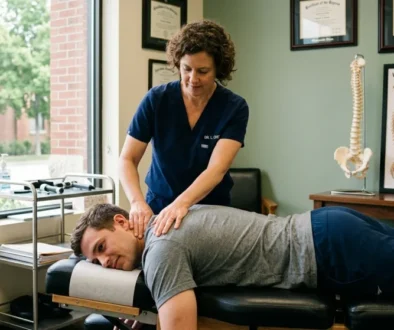
A chiropractor utilizes manual spinal manipulation and targeted physical modalities to restore mobility to restricted spinal joints. When you visit a clinic for lower back pain, the practitioner first conducts a comprehensive biomechanical evaluation. This assessment includes testing your range of motion. The doctor also assesses orthopedic reflexes and performs neurological exams to locate the exact source of your pain. By identifying restricted joints, muscle imbalances, and nerve irritation, the practitioner designs a customized plan to realign your vertebrae.
The core intervention is the spinal adjustment, also known as spinal manipulation. During this procedure, the chiropractor applies a controlled, sudden force to a specific joint. This joint is typically one that is restricted in its movement. This adjustment often produces a harmless auditory release. The noise is simply gas escaping from the joint space. By restoring proper movement to these spinal segments, chiropractic care reduces localized inflammation. It also relieves pressure on the exiting spinal nerves.
An experienced clinician knows that adjusting the spine is only one piece of the puzzle. A common professional mistake is focusing solely on the structural adjustment. Practitioners must also address the surrounding soft tissues and the patient’s kinetic chain. Muscles, tendons, and ligaments pull on the bones. If your clinician does not address myofascial tension and muscular weakness, your joints will quickly pull back out of alignment. Therefore, comprehensive chiropractic care integrates muscle stimulation, massage, and therapeutic exercise alongside joint adjustments.
Mechanical Causes of Lumbar Discomfort and Dysfunction
Lower back pain rarely arises from a single, isolated event. Instead, it typically develops from cumulative stress on the delicate structures of the lumbar spine. Poor postural habits, weak abdominal muscles, and sedentary lifestyles put excess stress on your lower back daily. Over time, this constant strain leads to mechanical dysfunctions. These include facet joint locking, sacroiliac joint dysfunction, and intervertebral disc herniations.
The facet joints link your vertebrae together. They allow your spine to twist and bend. When these joints lose their lubrication or become misaligned, they cause sharp, localized pain. This pain often intensifies when you lean backward. Additionally, the sacroiliac joints connect your spine to your pelvis. These joints can become hypermobile or hypomobile. This imbalance results in dull, aching pain. The pain frequently radiates into your buttocks and upper thighs, mimicking sciatic nerve pain.
According to a comprehensive study published in The Lancet, lower back pain remains the leading cause of years lived with disability globally, affecting more than 619 million individuals. This widespread issue is largely driven by mechanical strains that go untreated. When small misalignments are ignored, the body compensates. It tightens the surrounding muscles, creating a cycle of chronic tension and restricted mobility.
Primary Chiropractic Techniques for Lumbar Correction

Different patient profiles require different structural approaches to clinical care. A professional lower back pain chiropractor selects from a variety of techniques based on your age, pain severity, and spinal health. The most widely utilized method is the Diversified technique. This technique involves manual thrusts to restore joint motion. For patients who prefer a gentler approach, low-force instrument adjusting or table-assisted drop techniques are highly effective alternatives.
Another vital technique is flexion-distraction therapy. Practitioners perform this on a specialized moving table. The chiropractor gently stretches your spine while flexing the lower section of the table downward. This action creates a negative pressure inside the intervertebral discs. This gentle decompression pulls herniated or bulging disc material back into place. It takes the pressure off irritated nerve roots and reduces radiating leg pain or tingling.
Activator Methods use a small, handheld spring-loaded instrument to deliver a precise, low-force impulse to specific spinal segments. This method is exceptionally gentle. It works well for acute pain phases where manual twisting is too uncomfortable. By utilizing a clinical mix of these specialized techniques, chiropractors customize the force and direction of every adjustment. They match the treatment to your body’s specific tolerance and anatomical needs.
Understanding the Safety and Risks of Adjustments

Many first-time patients ask: can a chiropractor help with lower back pain safely? The answer is a resounding yes. Clinical research consistently demonstrates that chiropractic adjustments are exceptionally safe. This safety is guaranteed when adjustments are performed by a licensed, trained doctor of chiropractic. In fact, major medical guidelines now list spinal manipulation as a preferred non-drug starting point for acute and chronic back issues.
Some patients experience minor soreness or stiffness in the lower back for 24 to 48 hours following their initial adjustment. This reaction is completely normal. It is highly similar to the muscle soreness you might feel after starting a new exercise routine. It occurs because your joints are moving through a full range of motion. They may not have experienced this movement in months or even years. Your muscles are adjusting to their new, corrected structural positions.
A rigorous scientific review published by the National Center for Complementary and Integrative Health highlights that serious complications from lumbar spinal manipulation are incredibly rare. To guarantee safety, your chiropractor will perform a detailed clinical screening before your first adjustment. This screening rules out contraindications such as severe osteoporosis, spinal infections, advanced tumors, or severe nerve compression issues. Those issues might require immediate surgical consultation.
Lower Back Pain Chiropractic Treatment Options Compared
To understand which clinical approach matches your diagnostic needs, it is helpful to compare the primary manual therapies offered in modern chiropractic clinics. Every technique targets a different layer of your musculoskeletal system. For example, joint restriction requires structural adjustments. On the other hand, tight muscle knots require deep myofascial release or therapeutic massage.
Most patient care plans do not rely on just one single technique. Instead, they blend multiple modalities over a series of visits to achieve long-lasting results. The cost of chiropractic care is highly reasonable. It generally ranges between $60 and $150 per session depending on the complexity of the treatment and whether therapies like acupuncture are included.
| Treatment Method | Primary Biomechanical Focus | Ideal Candidate | Typical Price Range per Session |
|---|---|---|---|
| Spinal Manipulation (HVLA) | Restores joint mobility, reduces facet locking, and improves neural communication. | Patients with acute joint restriction, postural strain, or pelvic misalignment. | $60 – $110 |
| Flexion-Distraction Decompression | Separates disc spaces, decreases intradiscal pressure, and relieves nerve roots. | Patients suffering from sciatica, bulging discs, or spinal stenosis. | $80 – $150 |
| Myofascial Release Therapy | Breaks up scar tissue, releases trigger points, and relaxes hypertonic muscles. | Individuals with chronic muscle spasms, fibrous adhesions, or postural tension. | $70 – $130 |
| Instrument-Assisted Adjusting | Delivers gentle, localized, high-speed impulses to targeted joints without twisting. | Elderly patients, pediatric cases, or those in acute muscle guarding. | $60 – $100 |
Managing Lumbar Pain Long-Term Through Active Rehabilitation

Achieving relief from back pain is only the first phase of an effective treatment plan. The real key to lasting comfort is maintaining spinal stability and mobility. This is achieved through active lifestyle modifications and targeted exercises. When your spine is properly aligned, your core muscles must be strong enough to support that alignment. Without a strong core, your daily habits will slowly drag your joints back into restrictive, painful patterns.
Sitting for prolonged periods is a major contributor to mechanical back pain. When you sit, your hip flexors tighten. This action pulls your pelvis forward and arches your lower back. This posture places immense pressure on your lumbar discs and facet joints. To combat this, you should set a timer to stand, stretch, and walk. Try to do this for at least two minutes every half hour during your workday.
To build a resilient spine at home, follow this simple, daily sequence of active rehabilitation exercises:
- The Bird-Dog Exercise: Begin on your hands and knees. Slowly extend your right arm forward and your left leg backward until they are parallel to the floor. Hold for three seconds, return to the starting position, and switch sides. Perform 10 controlled repetitions on each side to build deep core stability.
- The Cat-Camel Stretch: On all fours, gently arch your back upward toward the ceiling, tucking your chin. Hold for three seconds, then let your belly sink toward the floor while looking slightly upward. Repeat this gentle motion 10 times to improve segmental spinal mobility.
- Glute Bridges: Lie on your back with your knees bent and feet flat on the floor. Squeeze your gluteal muscles and lift your hips until your body forms a straight line from your shoulders to your knees. Hold for two seconds, lower down, and repeat 15 times to strengthen your posterior chain.
- The Child’s Pose: Kneel on the floor, sit your hips back onto your heels, and reach your arms far forward on the floor. Lower your chest toward the ground and hold this gentle stretch for 30 seconds to relax tight lumbar muscles.
Determining how often to visit a chiropractor depends directly on your lifestyle and the severity of your condition. Many patients benefit from weekly sessions during an acute flare-up. These sessions then taper down to monthly maintenance adjustments. These preventative visits help address minor joint restrictions before they turn into severe, painful episodes.
What to Expect During Your Initial Chiropractic Consultation
Entering a chiropractic clinic for the first time should be an educational and comfortable experience. Your first visit focuses heavily on diagnostic discovery. The goal is to pinpoint the exact mechanics of your lumbar pain. Your chiropractor will take a detailed health history. They will ask when the pain started, what makes it worse, and what lifestyle factors might be contributing to your discomfort.
Following the history, the chiropractor conducts a physical exam. The doctor will perform a static and dynamic palpation of your spine. This means they will gently feel your vertebrae while you are resting and while you are moving. This helps locate joint restrictions and muscle spasms. They will also assess your posture. They check for uneven shoulders, a tilted pelvis, or an exaggerated lumbar curve that could be stressing your back.
In some cases, diagnostic imaging like X-rays may be necessary. If you have had recent trauma, show signs of severe disc issues, or fail to respond to early treatments, X-rays help rule out structural pathology. Once the diagnosis is complete, your chiropractor will sit down with you. They will explain their findings and lay out a clear, step-by-step treatment plan designed to get you moving pain-free.
How Chiropractic Care Compares to Medical Alternatives
When dealing with lower back pain, you have multiple treatment pathways to choose from. Traditional medical management often relies on pharmaceutical interventions. These include nonsteroidal anti-inflammatory drugs, muscle relaxers, or corticosteroid injections. While these treatments are highly effective at temporarily reducing inflammation and dulling pain, they do not correct the underlying joint restriction or muscle imbalance that caused the issue in the first place.
According to the clinical practice guidelines published by the American College of Physicians, non-pharmacologic therapies should be the first line of defense for acute, subacute, and chronic low back pain. These guidelines explicitly recommend spinal manipulation, massage, acupuncture, and physical therapy. They recommend these before resorting to prescription medications or surgical consultations. This evidence-based shift highlights the medical community’s growing recognition of manual therapies.
Surgical interventions like lumbar fusions or microdiscectomies are necessary in a small percentage of cases. This is particularly true when there is progressive nerve damage. However, back surgery carries inherent risks and often requires months of painful recovery. Choosing conservative chiropractic care first allows you to explore safe, non-invasive methods. These methods successfully resolve back pain for the vast majority of patients without the risks of surgery.
FAQ
What does a chiropractor do for lower back pain on the first visit?
During your first visit, a chiropractor conducts a thorough physical, orthopedic, and neurological examination to diagnose the root cause of your pain. They will test your posture, joint range of motion, and reflexes. They may also take X-rays if clinically indicated. If appropriate, they may perform a gentle initial spinal adjustment to start relieving your discomfort.
How many chiropractic sessions will I need to resolve my back pain?
The number of sessions depends on whether your pain is acute or chronic and how quickly your body heals. Most acute cases see significant improvement within four to six visits over a few weeks. Chronic or severe conditions may require a structured treatment plan of two to three months of active adjustments followed by periodic maintenance care.
Can a chiropractor help with lower back pain caused by a herniated disc?
Yes, chiropractors use specialized, gentle techniques like flexion-distraction therapy to relieve disc herniation symptoms. This treatment gently stretches the spine, creating negative pressure that helps draw the bulging disc material away from compressed nerves. This non-invasive approach reduces localized pain and alleviates radiating sciatic nerve discomfort down your leg.
Is chiropractic treatment painful for someone with severe back spasms?
Chiropractic adjustments are generally not painful, even if you are experiencing severe muscle spasms. Your chiropractor will use highly gentle, low-force techniques and soft-tissue mobilization to relax the surrounding muscles before performing any joint adjustments. Most patients experience an immediate sense of relief and reduced muscle tension directly following their session.
Which is better for lower back pain, physical therapy or chiropractic care?
Both therapies work together in a highly complementary manner to resolve lower back issues. Chiropractic care focuses on restoring proper alignment and motion to restricted joints. On the other hand, physical therapy focuses on strengthening the core and stabilizing muscles that support the spine. Combining these two approaches yields the most comprehensive, long-term results.
When should you not see a chiropractor for lower back pain?
You should avoid spinal manipulation if you have severe osteoporosis, spinal cord compression, a spinal infection, or a known bone fracture. If you experience progressive neurological deficits like sudden leg weakness, numbness in the groin area, or loss of bowel and bladder control, seek emergency medical care immediately rather than chiropractic treatment.